
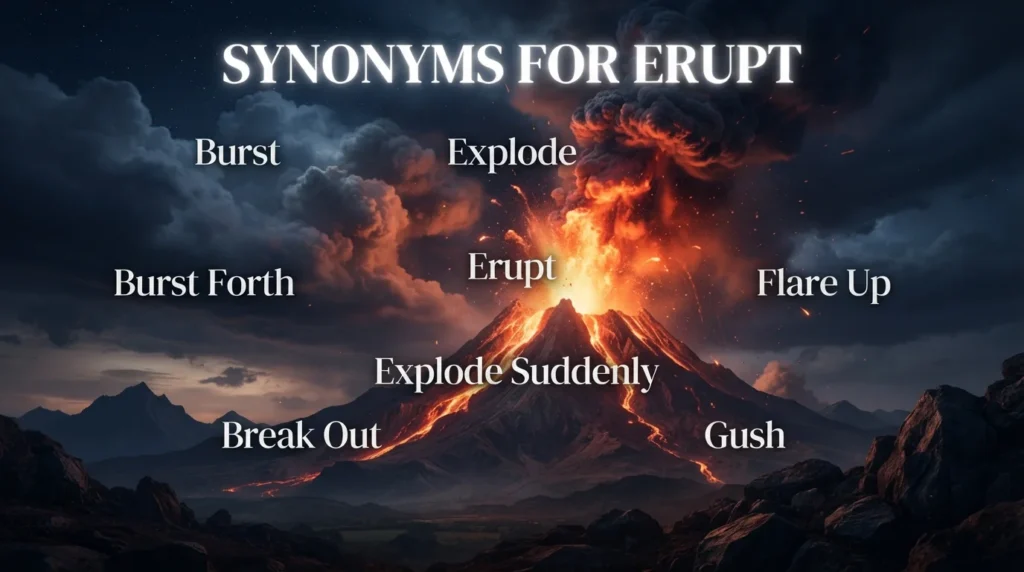
synonym for erupt is a powerful phrase that instantly transforms your English skills. Imagine watching a peaceful volcano suddenly burst into flame without any warning.
A sudden flash flood can cause a riverbank to erupt overnight. Learning dynamic words helps you describe these sudden events with clarity.
Using synonyms expands your vocabulary and makes your writing engaging. It helps students, bloggers, and writers avoid boring, repetitive language.
You can use a synonym for erupt in essays, work reports, or daily talk. Expanding your word power builds instant confidence in every conversation.
What Does “Erupt” Really Mean?
To erupt means to break out suddenly and dramatically, often with great force or noise. Native English speakers understand it as an explosive release of built-up pressure. The emotional tone can range from terrifying violence to pure, unbridled joy.
You will see this word in science reports, news broadcasts, and dramatic stories. It functions as a verb in English grammar. Simply put, it means to burst out or explode.
Connotative Meaning
Connotation is the emotional feeling or idea associated with a word beyond its strict definition.
- Positive tone: Laughter or applause bursting forth spontaneously in a room.
- Negative tone: Violence, anger, or disease breaking out without warning.
- Neutral tone: Geysers spraying water or skin rashes appearing suddenly.
Etymology
The word originates from the Latin verb erumpere, which means “to break out or burst forth.”
- Old English (450–1100): Not present in Old English; scholars used native Germanic terms like berstan.
- Middle English (1100–1500): Adapted late from Latin texts into early scientific descriptions.
- Modern English (1500–Present): Fully integrated to describe geological, medical, and emotional outbursts.
Pronunciation (US & UK – IPA)
- US: /ɪˈrʌpt/
- UK: /ɪˈrʌpt/
Syllables
e-rupt
Affixation Pattern
- Root: rupt (meaning to break)
- Prefix: e- (variant of ex-, meaning out)
- Suffix: None
Synonyms List
Explode (Verb) — US: /ɪkˈsploʊd/ | UK: /ɪkˈspləʊd/
Meaning: To burst violently due to internal pressure or force.
Tone/Register: Neutral to Dramatic
Example 1: The fireworks exploded in the night sky.
Example 2: The angry customer exploded when he heard the bad news.
Burst (Verb) — US: /bɜːrst/ | UK: /bɜːst/
Meaning: To break open suddenly from internal pressure.
Tone/Register: Informal / General
Example 1: The water pipe burst during the freezing weather.
Example 2: She burst into tears after finishing the tough exam.
Blow up (Verb) — US: /bloʊ ʌp/ | UK: /bləʊ ʌp/
Meaning: To shatter or destroy by an explosion.
Tone/Register: Informal / Spoken
Example 1: Workers had to blow up the old bridge safely.
Example 2: His phone started to blow up with messages after the viral post.
Flare up (Verb) — US: /fleər ʌp/ | UK: /fleə r ʌp/
Meaning: A sudden increase in the intensity or activity of fire or emotion.
Tone/Register: General / Medical
Example 1: My skin allergy tends to flare up in the summer heat.
Example 2: Tempers flare up easily during stressful traffic jams.
Detonate (Verb) — US: /ˈdet.ən.eɪt/ | UK: /ˈdet.ən.eɪt/
Meaning: To explode with sudden violence and extreme force.
Tone/Register: Formal / Technical
Example 1: Demolition experts detonate the explosives carefully.
Example 2: The device failed to detonate under test conditions.
Break out (Verb) — US: /breɪk aʊt/ | UK: /breɪk aʊt/
Meaning: To start suddenly and spread rapidly.
Tone/Register: General / Conversational
Example 1: A wildfire broke out in the dry forest last night.
Example 2: Protests broke out across the city center today.
Spew (Verb) — US: /spjuː/ | UK: /spjuː/
Meaning: To eject large amounts of material rapidly and forcefully.
Tone/Register: Graphic / Informal
Example 1: The factory chimney spews black smoke all afternoon.
Example 2: The volcano began to spew hot ash over the nearby town.
Gush (Verb) — US: /ɡʌʃ/ | UK: /ɡʌʃ/
Meaning: To pour out suddenly and in large amounts.
Tone/Register: Descriptive / General
Example 1: Water gushed from the broken fire hydrant.
Example 2: She gushed with praise about her new team members.
Spout (Verb) — US: /spaʊt/ | UK: /spaʊt/
Meaning: To send out a liquid in a sudden, forceful stream.
Tone/Register: Descriptive
Example 1: The whale spouted water high into the brisk ocean air.
Example 2: Oil spouted into the air during the deep drilling.
Discharge (Verb) — US: /dɪsˈtʃɑːrdʒ/ | UK: /dɪsˈtʃɑːdʒ/
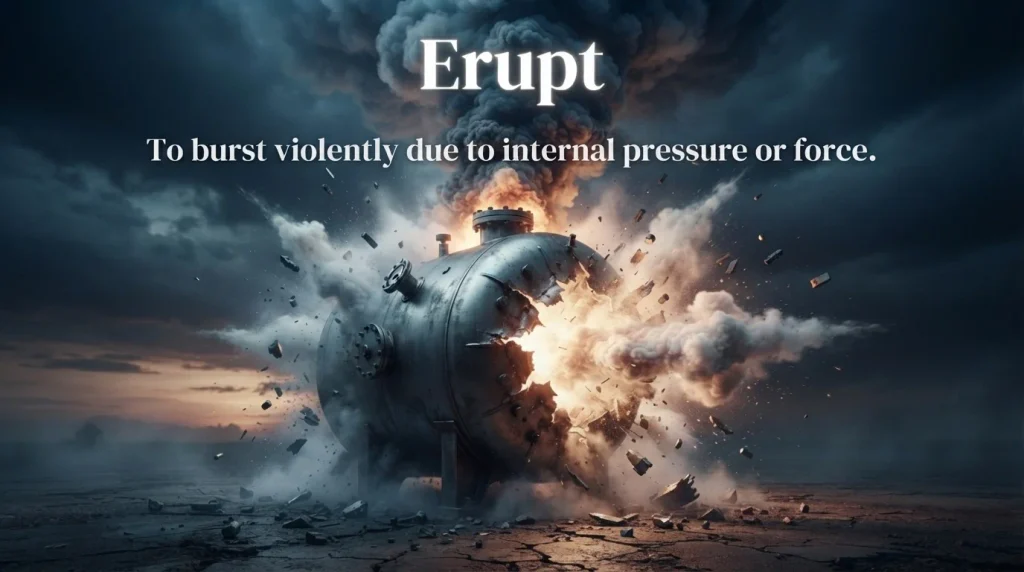
Meaning: To release content or force from a container or body.
Tone/Register: Formal / Scientific
Example 1: The valve discharges excess pressure automatically.
Example 2: Battery cells discharge quickly in cold weather conditions.
Eject (Verb) — US: /ɪˈdʒekt/ | UK: /ɪˈdʒekt/
Meaning: To drive or force out with sudden violence.
Tone/Register: Technical / Formal
Example 1: The jet pilot managed to eject before the crash.
Example 2: The machine ejected the damaged disc safely.
Shatter (Verb) — US: /ˈʃæt.ɚ/ | UK: /ˈʃæt.ər/
Meaning: To break suddenly into many small pieces with force.
Tone/Register: Dramatic
Example 1: Thunder caused the fragile window to shatter.
Example 2: The loud news shattered the peace of the quiet evening.
Pop (Verb) — US: /pɑːp/ | UK: /pɒp/
Meaning: To burst open with a quick, sharp sound.
Tone/Register: Informal / Daily
Example 1: The balloon popped when it touched the sharp grass.
Example 2: Corn kernels pop quickly inside the microwave oven.
Blast (Verb) — US: /blæst/ | UK: /blɑːst/
Meaning: To blow up or break apart with explosives or heavy force.
Tone/Register: Action / News
Example 1: Miners blast the mountain rock to create a smooth tunnel.
Example 2: Music blared and blasted through the large speakers.
Belch (Verb) — US: /beltʃ/ | UK: /beltʃ/
Meaning: To emit gas, smoke, or fire aggressively from an opening.
Tone/Register: Informal / Visceral
Example 1: The furnace belched clouds of thick dark smoke.
Example 2: The volcano belched a huge plume of grey ash.
Vent (Verb) — US: /vent/ | UK: /vent/
Meaning: To release strong feelings or physical gas forcefully.
Tone/Register: Psychological / General
Example 1: Steam vents out through the small safety valve.
Example 2: He sat down to vent his anger to a good friend.
Outburst (Verb/Noun) — US: /ˈaʊt.bɝːst/ | UK: /ˈaʊt.bɜːst/
Meaning: To break out with a sudden display of force or emotion.
Tone/Register: Emotional / Descriptive
Example 1: Her sudden outburst shocked everyone in the quiet meeting room.
Example 2: Solar flares erupt across the surface of the sun.
Eruptate (Verb) — US: /ɪˈrʌp.teɪt/ | UK: /ɪˈrʌp.teɪt/
Meaning: To cast forth or burst out in a formal sense.
Tone/Register: Academic / Rare
Example 1: Geologists observed the geyser eruptate on schedule.
Example 2: Thermal springs eruptate mineral water across the valley.
Ignite (Verb) — US: /ɪɡˈnaɪt/ | UK: /ɪɡˈnaɪt/
Meaning: To catch fire or cause something to burst into flame suddenly.
Tone/Register: Technical / Formal
Example 1: A tiny spark ignited the dry gas inside the pipe.
Example 2: Her speech ignited passion in the hearts of voters.
Irrupt (Verb) — US: /ɪˈrʌpt/ | UK: /ɪˈrʌpt/
Meaning: To burst in violently or enter with force.
Tone/Register: Formal / Academic
Example 1: Wild birds irrupt into southern areas during severe winters.
Example 2: Protesters try to irrupt into the secure building hall.
Vaporize (Verb) — US: /ˈveɪ.pɚ.aɪz/ | UK: /ˈveɪ.pər.aɪz/
Meaning: To burst or turn into vapor rapidly under extreme heat.
Tone/Register: Scientific
Example 1: The meteor vaporized as it entered the Earth’s atmosphere.
Example 2: Water droplets vaporize instantly on the scorching hot pan.
Jet (Verb) — US: /dʒet/ | UK: /dʒet/
Meaning: To spurt out in a rapid stream.
Tone/Register: Action
Example 1: High-pressure water jets out of the thin nozzle.
Example 2: Steam jets from the radiator cap when unscrewed.
Cascade (Verb) — US: /kæsˈkeɪd/ | UK: /kæsˈkeɪd/
Meaning: To pour out rapidly like a waterfall.
Tone/Register: Poetic / Formal
Example 1: Water cascades over the rocks after heavy rainfall.
Example 2: Sparks cascade down as the metalworker cuts steel.
Fracture (Verb) — US: /ˈfræk.tʃɚ/ | UK: /ˈfræk.tʃər/
Meaning: To break apart violently due to heavy strain.
Tone/Register: Medical / Technical
Example 1: Heavy pressure caused the concrete beam to fracture.
Example 2: The sudden impact fractured the glass display case.
Splinter (Verb) — US: /ˈsplɪn.t̬ɚ/ | UK: /ˈsplɪn.tər/
Meaning: To break violently into small, sharp pieces.
Tone/Register: Descriptive
Example 1: The wooden door splintered when the rescue crew hit it.
Example 2: The blast splintered the surrounding trees into pieces.
Surge (Verb) — US: /sɝːdʒ/ | UK: /sɜːdʒ/
Meaning: To rush forward or upward in a powerful wave.
Tone/Register: General / Literary
Example 1: The crowd surged past the open gates into the stadium.
Example 2: Electrical voltage surged during the heavy thunderstorm.
Overflow (Verb) — US: /ˌoʊ.vɚˈfloʊ/ | UK: /ˌəʊ.vəˈfləʊ/
Meaning: To spill over limits due to excess volume.
Tone/Register: Neutral
Example 1: Rivers overflow after three days of continuous rainfall.
Example 2: Her heart overflowed with pure happiness at graduation.
Spurt (Verb) — US: /spɝːt/ | UK: /spɜːt/
Meaning: To gush out suddenly in a short, forceful stream.
Tone/Register: Informal / Direct
Example 1: Paint spurted from the clogged spray hose onto his shirt.
Example 2: The runner spurted past her rivals near the finish line.
Boil over (Verb) — US: /bɔɪl ˈoʊ.vɚ/ | UK: /bɔɪl ˈəʊ.vər/
Meaning: To overflow from heating or spill into open conflict.
Tone/Register: Conversational
Example 1: The warm milk will boil over if left unattended.
Example 2: Workplace tension boiled over into a loud argument today.
Climax (Verb) — US: /ˈklaɪ.mæks/ | UK: /ˈklaɪ.mæks/
Meaning: To reach a violent or powerful peak of action.
Tone/Register: Dramatic
Example 1: The concert climaxes with a massive light show display.
Example 2: Tensions climaxed in an intense debate between leaders.
Exude (Verb) — US: /ɪɡˈzjuːd/ | UK: /ɪɡˈzjuːd/
Meaning: To ooze or release slowly under pressure.
Tone/Register: Literary / Formal
Example 1: Pine trees exude sticky resin when bark breaks.
Example 2: The confident speaker exuded charm across the room.
Extravasate (Verb) — US: /ɪkˈstræv.ə.seɪt/ | UK: /ɪkˈstræv.ə.seɪt/

Meaning: To force out liquid or lava from normal vessels.
Tone/Register: Scientific / Rare
Example 1: Molten rock extravasates through deep fissures in the Earth.
Example 2: Fluids extravasate into surrounding tissues after trauma.
Well up (Verb) — US: /wel ʌp/ | UK: /wel ʌp/
Meaning: To rise to the surface, ready to overflow.
Tone/Register: Emotional
Example 1: Tears welled up in his eyes during the sad film.
Example 2: Great pride welled up when she won the award.
Flash (Verb) — US: /flæʃ/ | UK: /flæʃ/
Meaning: To burst into light or activity suddenly.
Tone/Register: Visual
Example 1: Lightning flashed brightly across the dark storm clouds.
Example 2: Anger flashed across his face for a brief moment.
Fracture open (Verb) — US: /ˈfræk.tʃɚ ˈoʊ.pən/ | UK: /ˈfræk.tʃər ˈəʊ.pən/
Meaning: To split apart violently under internal stress.
Tone/Register: Technical
Example 1: High heat caused the rock face to fracture open.
Example 2: The pressure tank fractured open during stress testing.
Flame up (Verb) — US: /fleɪm ʌp/ | UK: /fleɪm ʌp/
Meaning: To burst into bright, active flames suddenly.
Tone/Register: Descriptive
Example 1: Dry leaves flame up quickly when a match hits them.
Example 2: The campfire flamed up as dry wood was added.
Blare (Verb) — US: /bleər/ | UK: /bleər/
Meaning: To burst out with loud, harsh noise.
Tone/Register: Auditory / Informal
Example 1: Car horns blare in heavy morning city traffic.
Example 2: Sirens blared as emergency vehicles rushed past us.
Outpour (Verb) — US: /ˈaʊt.pɔːr/ | UK: /ˈaʊt.pɔːr/
Meaning: To release or stream out in large quantities.
Tone/Register: Formal
Example 1: Support outpours from the community to help families.
Example 2: Lava outpours smoothly down the volcano side slopes.
Shatter out (Verb) — US: /ˈʃæt.ɚ aʊt/ | UK: /ˈʃæt.ər aʊt/
Meaning: To break rapidly and explode outward in pieces.
Tone/Register: Action
Example 1: Glass fragments shatter out from the high pressure.
Example 2: Debris shattered out in all directions after the blast.
Egress (Verb) — US: /ˈiː.ɡres/ | UK: /ˈiː.ɡres/
Meaning: To emerge or burst out from an enclosed space.
Tone/Register: Formal / Legal
Example 1: Gas began to egress rapidly through the open pipe.
Example 2: Water egresses through drainage holes in the dam.
Synonyms for Erupt by Tone
- Positive: Cascade, well up, surge, flash.
- Neutral: Discharge, eject, spout, egress, overflow.
- Negative: Explode, detonate, shatter, belch, flare up, fracture.
- Playful/Informal: Pop, blow up, spurt, boil over.
Understanding tone matters deeply because using a negative word like “detonate” to describe laughter creates confusion, whereas “burst” fits perfectly.
Erupt vs Close Alternatives
| Feature | Erupt | Explode | Flare up |
| Meaning Difference | Breaking out through a surface or skin | Shattering into pieces from pressure | Sudden increase in fire or conflict |
| Tone Difference | Dramatic and geological | Destructive and violent | Temporary and reactive |
| When to Use | Volcanoes, rash on skin, laughter | Bombs, gas tanks, extreme rage | Allergies, minor fights, campfires |
How Erupt Changes by Context
In daily conversation, people use erupt to describe quick laughter or sudden arguments. You might say a party erupted into cheers when the team won.
In writing or blogging, the word creates vivid visual pictures for readers. Authors use it to describe physical events like geysers or sudden emotional changes in characters.
In a professional or academic tone, scientists use erupt specifically for volcanic activity, geothermal vents, or medical skin conditions like rashes.
In creative or informal use, you can describe your inbox erupting with new notifications after a social media post goes viral online.
Common Mistakes Learners Make
- Confusing Erupt and Irrupt: Erupt means bursting outward, while irrupt means bursting inward or entering violently.
- Using it for slow processes: Do not use erupt for slow events. Erupt requires sudden speed and energy.
- Overusing Explode: Many writers overuse “explode” when “erupt”, “flare up”, or “spurt” offers a clearer description.
To master academic transitions, check out our guide on language registers to polish your sentence flow.
Real-Life Mini Scenarios
- Workplace: During a long meeting, the team erupted with cheers when the manager announced a long holiday weekend.
- Social Situations: The kids erupted into laughter when the funny clown dropped his ice cream cone.
- Media / Pop Culture: The stadium erupted as the rock star walked onto the main stage.
- Storytelling: Without warning, the ancient volcano erupted, filling the sky with thick gray dust.

Conclusion
Learning various synonyms helps you choose the exact right term for any situation you want to describe. Swapping out basic words makes your speech lively and engages listeners easily.
Mastering these words boosts your academic essays, professional blog posts, and daily talks with friends. Your communication becomes clearer and far more interesting.
Try picking three words from this list and use them in your next email or journal entry today!
Interactive Practice Quiz
- Which synonym best fits a sudden rash on human skin?
A) Detonate
B) Flare up
C) Vaporize
D) Shatter - If a volcano sends ash into the air, it is said to:
A) Spew
B) Pop
C) Cascade
D) Egress - Which word carries a positive emotional tone?
A) Belch
B) Well up
C) Fracture
D) Explode - Demolition workers use explosives to __________ an old building.
A) Cascade
B) Detonate
C) Exude
D) Overflow - What happens to a balloon when touched by a needle?
A) It irrupts
B) It pops
C) It extrudes
D) It egresses - If a crowd suddenly cheers, they __________ into applause.
A) Fracture
B) Erupt
C) Discharge
D) Vaporize - Choose the most formal/scientific synonym:
A) Blow up
B) Discharge
C) Pop
D) Boil over - Which word fits water pouring smoothly over a cliff?
A) Blast
B) Cascade
C) Detonate
D) Belch - “Tensions boiled over” means the situation became:
A) Peaceful
B) Conflict-ridden
C) Cold
D) Silent - What is the main difference between erupt and irrupt?
A) Erupt is outward, irrupt is inward
B) Erupt is slow, irrupt is fast
C) Erupt is soft, irrupt is loud
D) They are identical
Application Task: Write one short sentence using the synonym “surge” to describe an ocean wave or electrical power.
Answer Key: 1-B, 2-A, 3-B, 4-B, 5-B, 6-B, 7-B, 8-B, 9-B, 10-A
FAQs
What is the most common synonym for erupt in daily English?
The most common everyday synonym for erupt is “explode” or “burst out.” People use these terms frequently to describe physical explosions or sudden emotional outbursts in casual conversations.
Can I use erupt to describe emotions instead of physical events?
Yes, you can easily use erupt for feelings. It works great to describe sudden laughter, unexpected anger, or joyful cheers breaking out in a room full of people.
What is the difference between erupt and explode?
Erupt means breaking out forcefully through a surface, like lava or a skin rash. Explode implies shattering into pieces from internal pressure, like a bomb or a popped balloon.
What is a scientific synonym for volcanic eruption?
In geological sciences, terms such as “ejection,” “extravasation,” and “outpouring” are used as precise synonyms for volcanic material breaking through Earth’s crust.
Is flare up a good synonym for erupt?
Yes, “flare up” works well as a synonym for sudden fires, medical symptoms, skin conditions, or quick verbal arguments that start without much warning.

Sophia Carter is the founder and lead writer at SynonymVerse.com, a trusted online resource dedicated to English vocabulary and effective communication. She is passionate about helping students, writers, professionals, and lifelong learners find the most accurate words to express their ideas with clarity and confidence.
At SynonymVerse.com, every article is carefully researched and thoughtfully written to provide reliable guidance on synonyms, word meanings, and vocabulary. With a strong focus on accuracy, real-world usage, and easy-to-understand explanations, the website is committed to helping readers strengthen their language skills, enrich their vocabulary, and become more confident communicators.