Synonym for starving open up a world of expressive English vocabulary for writers. You just skipped lunch, your stomach is growling loudly during a meeting, and you need the right word to describe that intense hunger.
Using a synonym for starving helps you express specific levels of hunger accurately in daily life. Saying you are ravenous hits differently than saying you are famished, depending on your situation.
Mastering a synonym for starving will upgrade your writing skills instantly. This essential word knowledge helps bloggers, students, and content writers replace repetitive, basic words with vivid alternatives.
What Does “Starving” Really Mean?
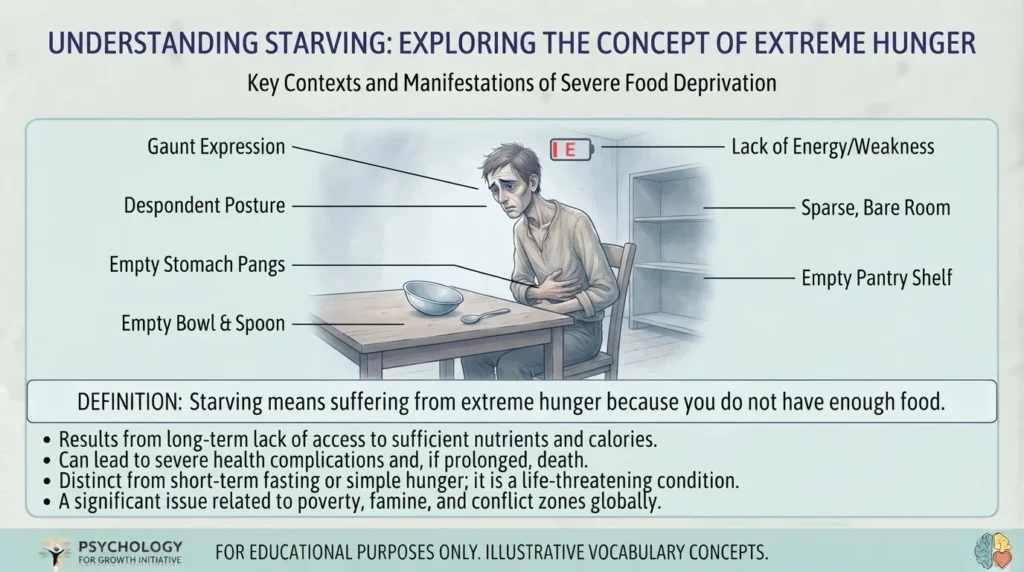
Starving means suffering from extreme hunger or dying from lack of food. In everyday modern speech, native English speakers use it informally to express that they are simply very hungry.
The emotional tone of starving ranges from lighthearted exaggeration in casual chats to serious concern in formal contexts. Native speakers instantly recognize the difference based on setting.
- Part of Speech: Verb (present participle) / Adjective
- Definition: Suffering from or dying of extreme hunger; informally, feeling extremely hungry.
Connotation
Connotation is the emotional feeling or cultural association attached to a word beyond its literal definition (the implied social or emotional meaning of a word beyond its strict dictionary definition).
- Positive tone: Expressing eager excitement for a delicious, upcoming meal.
- Negative tone: Describing actual severe malnutrition, physical suffering, or extreme famine.
- Neutral tone: Describing standard biological hunger in an objective medical context.
Etymology
The word comes from the Old English word steorfan, which meant to die of cold or hunger.
- Old English (450–1100): Steorfan meant to perish or die generally.
- Middle English (1100–1500): Sterven shifted specifically toward dying from hunger or cold.
- Modern English (1500–Present): Starve took on its modern sense of extreme food deprivation and informal hunger.
Syllables & Structure
- Syllables: starv-ing
- Root: Starve
- Prefix: None
- Suffix: -ing
Synonym List
1. Famished (Adjective)
- Meaning: Suffering from extreme hunger.
- Tone/Register: Informal to Semi-Formal
- Example 1: After hiking up the mountain all morning, the entire group felt famished.
- Example 2: We were famished by the time the dinner banquet finally started.
2. Ravenous (Adjective)
- Meaning: Extremely hungry or greedy for food.
- Tone/Register: Expressive / Literary
- Example 1: The ravenous teenage boys ate three whole pizzas in ten minutes.
- Example 2: She felt ravenous after completing her marathon training session.
3. Voracious (Adjective)
- Meaning: Having a huge appetite or wanting great quantities of food.
- Tone/Register: Formal / Academic
- Example 1: He showed a voracious appetite after fasting for twenty-four hours.
- Example 2: Wolves are voracious hunters during harsh winters.
4. Peckish (Adjective)
- Meaning: Slightly hungry.
- Tone/Register: Informal (British / Common English)
- Example 1: If you are feeling peckish, there are apples on the table.
- Example 2: I always get a bit peckish around three in the afternoon.
5. Esurient (Adjective)
- Meaning: Hungry or greedy.
- Tone/Register: Very Formal / Archaic
- Example 1: The article described the esurient crowd gathering outside the store.
- Example 2: Scholars often use esurient in historic literary essays.
6. Empty (Adjective)
- Meaning: Feeling a physical sensation of lack of food in the stomach.
- Tone/Register: Neutral / Conversational
- Example 1: My stomach feels empty because I forgot to eat breakfast.
- Example 2: Running on an empty stomach makes me feel dizzy.
7. Hollow (Adjective)
- Meaning: Feeling an aching void in the stomach due to hunger.
- Tone/Register: Descriptive / Informal
- Example 1: A hollow feeling in his stomach reminded him it was time for lunch.
- Example 2: She felt hollow after working twelve hours without a meal break.
8. Malnourished (Adjective)
- Meaning: Suffering from poor health due to lack of proper food.
- Tone/Register: Clinical / Formal
- Example 1: The rescue team provided aid to the malnourished animals.
- Example 2: Doctors treated the patient for severe malnutrition.
9. Underfed (Adjective)
- Meaning: Given insufficient food to maintain health.
- Tone/Register: Neutral / Descriptive
- Example 1: The shelter cared for underfed pets found on the streets.
- Example 2: Long journeys left the livestock looking thin and underfed.
10. Haggard (Adjective)
- Meaning: Looking exhausted and thin from hunger or suffering.
- Tone/Register: Literary / Descriptive
- Example 1: His haggard face showed the harsh effects of weeks without proper meals.
- Example 2: The lost travelers looked pale and haggard when rescued.
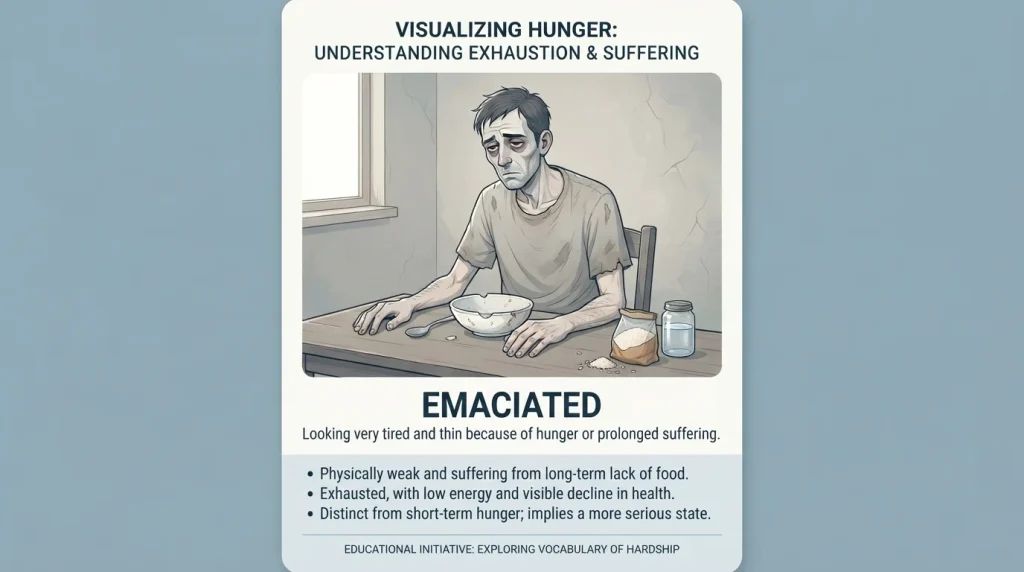
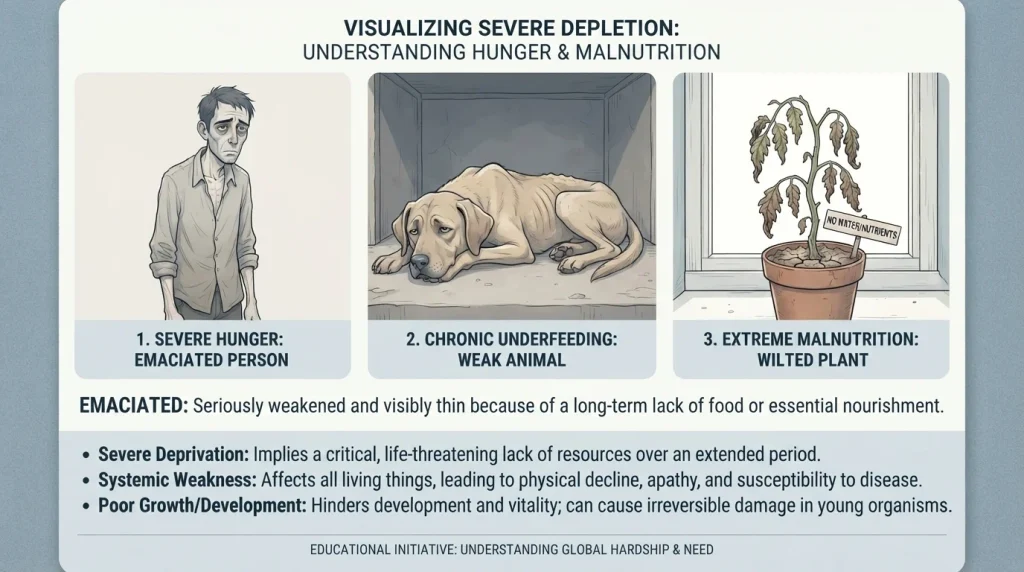
11. Emaciated (Adjective)
- Meaning: Abnormally thin or weak because of illness or extreme hunger.
- Tone/Register: Medical / Formal
- Example 1: The emaciated cattle struggled during the long drought.
- Example 2: Medical workers treated the emaciated survivors immediately.
12. Gluttonous (Adjective)
- Meaning: Excessively greedy for food.
- Tone/Register: Critical / Formal
- Example 1: The monarch was known for his gluttonous feasts every evening.
- Example 2: He tried to hide his gluttonous habit of eating late at night.
13. Sharp-set (Adjective)
- Meaning: Extremely hungry or having a keen appetite.
- Tone/Register: Old-fashioned / Literary
- Example 1: The chilly sea breeze made the sailors sharp-set for dinner.
- Example 2: We were sharp-set after working all afternoon outdoors.
14. Faint (Adjective)
- Meaning: Feeling weak or dizzy from a lack of food.
- Tone/Register: Conversational
- Example 1: I feel faint because I skipped lunch today.
- Example 2: Drink some juice if you feel faint from hunger.
15. Dying of hunger (Idiom)
- Meaning: Hyperbolic phrase for feeling very hungry.
- Tone/Register: Casual / Informal
- Example 1: Let us order food now because I am dying of hunger!
- Example 2: The kids came home from school complaining they were dying of hunger.
16. Ready to drop (Idiom)
- Meaning: Exhausted and weak due to hunger or physical effort.
- Tone/Register: Informal
- Example 1: After working double shifts without eating, she was ready to drop.
- Example 2: The team was ready to drop before dinner arrived.
17. Starved (Adjective)
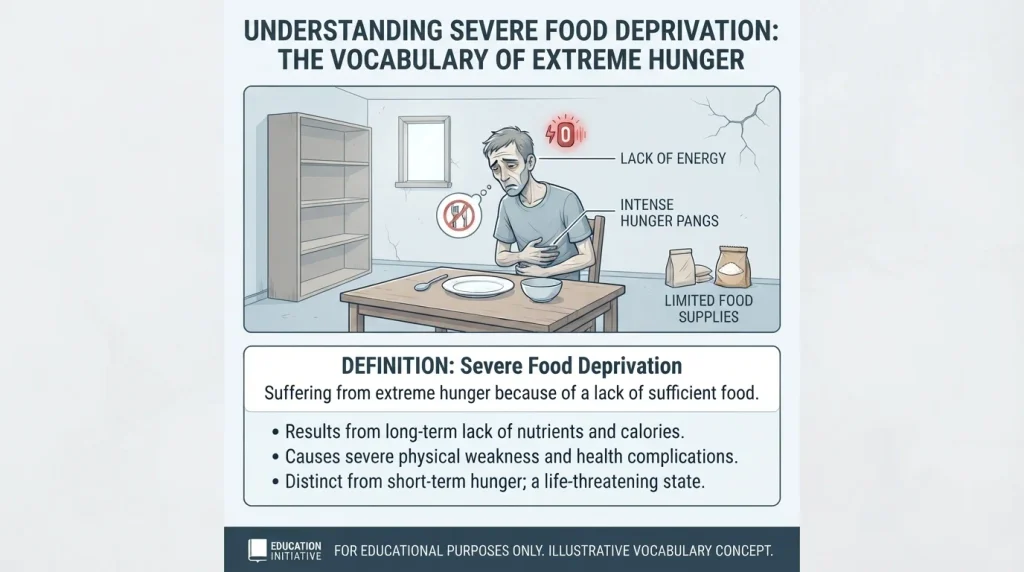
- Meaning: Suffering severe hunger or deprived of nourishment.
- Tone/Register: Neutral / Descriptive
- Example 1: The soil was starved of nutrients after years of poor farming.
- Example 2: He looked starved after his long wilderness expedition.
18. Insatiable (Adjective)
- Meaning: Impossible to satisfy an appetite.
- Tone/Register: Formal / Academic
- Example 1: Teenagers often have an insatiable desire for snacks.
- Example 2: Her insatiable appetite surprised everyone at the buffet.
19. Pinched (Adjective)
- Meaning: Looking thin, cold, or pale from lack of food.
- Tone/Register: Descriptive / Literary
- Example 1: Her pinched face revealed the stress of missing meals.
- Example 2: The child had a pinched look during the hard winter months.
20. Undernourished (Adjective)
- Meaning: Not getting enough food for good health.
- Tone/Register: Formal / Clinical
- Example 1: The program provides hot food to undernourished children.
- Example 2: Proper diets prevent athletes from becoming undernourished.
21. Hungry (Adjective)
- Meaning: Feeling a need or desire for food.
- Tone/Register: Neutral / General
- Example 1: The children were hungry after playing soccer outside.
- Example 2: I am hungry enough to eat an early dinner.
22. Craving (Adjective / Noun)
- Meaning: Having a powerful desire for specific food.
- Tone/Register: Conversational
- Example 1: She felt a craving for hot soup on a cold evening.
- Example 2: He had a craving state after skipping his morning snack.
23. Rapacious (Adjective)
- Meaning: Aggressively greedy or ravenous.
- Tone/Register: Formal / Academic
- Example 1: The rapacious appetite of the army consumed local supplies.
- Example 2: Predators are rapacious when hunting during winter months.
24. Ravening (Adjective)
- Meaning: Extremely hungry and searching hungrily for prey or food.
- Tone/Register: Literary / Dramatic
- Example 1: The forest was filled with ravening wolves in winter.
- Example 2: He looked around the buffet with a ravening gaze.
25. Hank-Marvin (Adjective)
- Meaning: British rhyming slang meaning extremely hungry (famished).
- Tone/Register: Very Informal / Slang
- Example 1: I haven’t eaten all day, and I am absolute Hank-Marvin.
- Example 2: Let us grab a sandwich because I am feeling Hank-Marvin.
26. Ready to eat a horse (Idiom)
- Meaning: Extremely hungry; capable of eating a huge amount of food.
- Tone/Register: Informal / Hyperbolic
- Example 1: After that three-hour exam, I am ready to eat a horse.
- Example 2: She walked into the kitchen saying she was ready to eat a horse.
27. Edgy (Adjective)
- Meaning: Irritable or tense because of hunger (hangry).
- Tone/Register: Informal
- Example 1: He gets edgy whenever his lunch break is delayed.
- Example 2: Being on an empty stomach made her feel edgy all afternoon.
28. Hangry (Adjective)
- Meaning: Bad-tempered or irritable as a result of feeling hungry.
- Tone/Register: Informal / Modern Slang
- Example 1: Please feed me soon because I am getting very hangry.
- Example 2: His hangry mood disappeared as soon as he ate a taco.
29. Fasting (Adjective / Participle)
- Meaning: Going without food for a specific period.
- Tone/Register: Neutral / Formal
- Example 1: The doctor asked for blood samples while the patient was fasting.
- Example 2: The fasting monks ate their first meal at sundown.
30. Unfed (Adjective)
- Meaning: Not having been given food.
- Tone/Register: Neutral / Descriptive
- Example 1: The unfed stray dogs barked near the kitchen door.
- Example 2: Leaving animals unfed for long hours causes them distress.
31. Famishing (Adjective / Participle)
- Meaning: Causing or suffering extreme hunger.
- Tone/Register: Descriptive / Old-fashioned
- Example 1: Working in the cold winds was a famishing experience.
- Example 2: The famishing heat made everyone lose their appetite initially.
32. Perishing (Adjective)
- Meaning: Suffering severe discomfort from hunger or cold.
- Tone/Register: Informal (British)
- Example 1: Come inside and eat something as you must be perishing.
- Example 2: I am perishing for a hot meal right now.
33. Starveling (Adjective / Noun)
- Meaning: Emaciated or starving person, animal, or plant.
- Tone/Register: Literary / Archaic
- Example 1: The starveling kitten drank the warm milk eagerly.
- Example 2: A starveling tree struggled to grow in poor soil.
34. Waiflike (Adjective)
- Meaning: Unhealthily thin and looking neglected or hungry.
- Tone/Register: Descriptive / Literary
- Example 1: The child appeared waiflike after surviving the storm alone.
- Example 2: Her waiflike figure caused her relatives great concern.
35. Skin-and-bones (Idiom)
- Meaning: Extremely thin due to long-term hunger or illness.
- Tone/Register: Informal / Descriptive
- Example 1: The rescued stray cat was reduced to skin-and-bones.
- Example 2: He returned from the desert looking like skin and bones.
36. Lacking nourishment (Phrase)
- Meaning: Not receiving necessary nutrients or food.
- Tone/Register: Formal / Educational
- Example 1: Children lacking nourishment face severe growth difficulties.
- Example 2: The soil was lacking nourishment after heavy rainfall.
37. Foodless (Adjective)
- Meaning: Being completely without food.
- Tone/Register: Literary / Descriptive
- Example 1: They spent three foodless days stranded in the mountain cabin.
- Example 2: A foodless kitchen made the family seek help from neighbors.
38. Deprived (Adjective)
- Meaning: Lacking adequate food, water, or necessary vital supplies.
- Tone/Register: Formal / Social Science
- Example 1: Deprived communities require immediate humanitarian assistance.
- Example 2: The body feels weak when deprived of food for too long.
39. Devouring (Adjective / Participle)
- Meaning: Consuming food with intense speed or urgency.
- Tone/Register: Literary / Expressive
- Example 1: The devouring crowd finished the food stalls in an hour.
- Example 2: He had a devouring hunger after his swimming lesson.
40. Sharp-set for food (Phrase)
- Meaning: Eagerly anticipating a hearty meal.
- Tone/Register: Archaic / Formal
- Example 1: All workers were sharp-set for food when noon arrived.
- Example 2: A long walk made us sharp-set for food at the inn.
41. Gutted (Adjective)
- Meaning: Feeling physical emptiness in the stomach from hunger.
- Tone/Register: Informal Slang
- Example 1: My stomach feels completely gutted after missing two meals.
- Example 2: He felt gutted and needed a heavy breakfast immediately.
42. Unfilled (Adjective)
- Meaning: Having an unsatisfied or empty stomach.
- Tone/Register: Descriptive
- Example 1: His unfilled stomach kept him awake all night.
- Example 2: An unfilled belly makes it hard for students to concentrate.
43. Pining for food (Phrase)
- Meaning: Longing intensely for something to eat.
- Tone/Register: Expressive / Informal
- Example 1: The stranded hikers were pining for food in the tent.
- Example 2: She found herself pining for food after late-night study hours.
44. Greedy (Adjective)
- Meaning: Wanting more food than one actually needs due to hunger.
- Tone/Register: Conversational
- Example 1: The greedy puppy ate his entire bowl in five seconds.
- Example 2: He felt greedy for snacks after missing dinner.
45. Bottomless (Adjective)
- Meaning: Extremely hungry, as if food disappears without satisfying.
- Tone/Register: Informal / Expressive
- Example 1: Teenagers often seem to have bottomless appetites.
- Example 2: My stomach feels bottomless after doing cardio exercises today.
46. Carnivorous (Adjective)
- Meaning: Figuratively expressing an intense hunger for meat or food.
- Tone/Register: Dramatic / Academic
- Example 1: The team had a carnivorous craving for steak after the match.
- Example 2: He stared at the dinner barbecue with carnivorous interest.
47. Weak-kneed (Adjective)
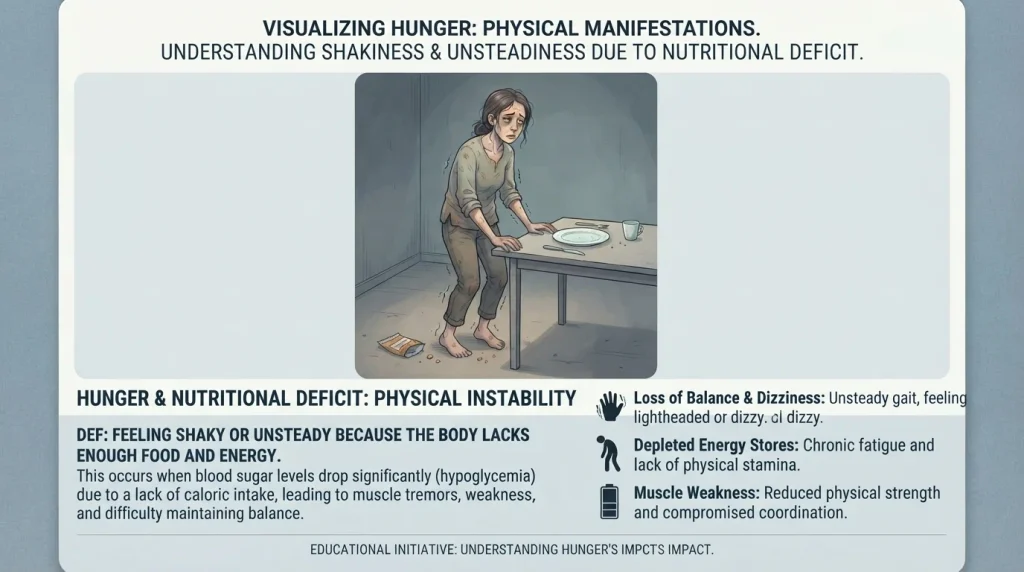
- Meaning: Physically shaky or unsteady due to a lack of food.
- Tone/Register: Informal
- Example 1: Skipping breakfast left her feeling weak-kneed by noon.
- Example 2: He felt weak-kneed after walking five miles without water or food.
48. Clamorous for food (Phrase)
- Meaning: Loudly demanding food due to hunger.
- Tone/Register: Literary
- Example 1: The birds were clamorous for food in early spring.
- Example 2: Nursery children became clamorous for food before lunch hour.
49. Lightheaded (Adjective)
- Meaning: Dizzy or faint from low blood sugar or lack of food.
- Tone/Register: Conversational / Medical
- Example 1: I felt lightheaded after standing in line without eating lunch.
- Example 2: Have some fruit if you start feeling lightheaded.
50. In need of sustenance (Phrase)
- Meaning: Requiring food or nourishment to maintain energy.
- Tone/Register: Formal / Professional
- Example 1: The marathon runners were in severe need of sustenance.
- Example 2: After a hard work shift, he was in need of sustenance.
51. Wolfish (Adjective)
- Meaning: Having a fierce, aggressive, or predator-like hunger.
- Tone/Register: Literary / Expressive
- Example 1: He ate the sandwich with a wolfish speed.
- Example 2: The lost camper gave a wolfish look at the roasted chicken.
52. Gluttonlike (Adjective)
- Meaning: Eating in a hasty or overly eager manner from hunger.
- Tone/Register: Descriptive
- Example 1: His gluttonous eating habits surprised everyone at lunch.
- Example 2: She swallowed her meal in a gluttonous haste.
53. Unappeased (Adjective)
- Meaning: Having a hunger that has not yet been satisfied.
- Tone/Register: Literary / Formal
- Example 1: His unappeased hunger drove him to search the pantry again.
- Example 2: A small salad left her appetite completely unappeased.
54. Dying for a bite (Idiom)
- Meaning: Needing food very urgently.
- Tone/Register: Casual / Informal
- Example 1: I am dying for a bite to eat after that long meeting.
- Example 2: We were dying for a bite when the restaurant opened.
55. Hungry as a bear (Idiom)
- Meaning: Having an exceptionally strong or massive appetite.
- Tone/Register: Informal / Traditional
- Example 1: After working in the garden, I am as hungry as a bear.
- Example 2: He woke up from his afternoon nap hungry as a bear.
Synonyms for “Starving” by Tone
| Tone Category | Synonyms | When to Use |
| Positive / Enthusiastic | Ravenous, Voracious, Craving | Use when eagerly anticipating a large meal. |
| Neutral / Descriptive | Empty, Underfed, Undernourished, Hungry, Unfed | Use in general or technical statements about hunger. |
| Negative / Severe | Malnourished, Emaciated, Haggard, Starving | Use in serious, medical, or tragic contexts. |
| Playful / Informal | Famished, Peckish, Dying of hunger, Hangry, Ready to eat a horse | Use in everyday casual conversations with friends. |
Tone matters deeply in word choice because using a severe term like emaciated for daily lunch hunger sounds insensitive, while calling genuine famine peckish minimizes real suffering.
“Starving” vs. Close Alternatives
- Starving vs. Famished: Starving literally means dying of hunger, though used casually. Famished is an expressive alternative used primarily to mean extremely hungry in social settings without serious medical undertones.
- Starving vs. Peckish: Starving implies intense, overwhelming hunger. Peckish means mild hunger where a small snack will suffice.
- Starving vs. Emaciated: Starving describes the state of needing food. Emaciated describes the severe physical appearance (extreme thinness) resulting from long-term starvation.
How “Starving” Changes by Context
- Daily Conversation: Used casually as an exaggeration (“I’m starving, let’s grab lunch”).
- Writing or Blogging: Used descriptive words like famished or ravenous to avoid cliché phrasing.
- Professional Tone: Expressed as having an appetite or needing a meal break (“Let’s break for lunch before everyone gets too hungry”).
- Creative Writing: Used precise emotional words like haggard or hollow to build vivid sensory scenes.
Common Mistakes & Native Usage
- Overusing exaggeration: Avoid using medical terms like emaciated when you just want a sandwich.
- Confusing degrees of hunger: Do not use peckish when someone has not eaten all day.
- Register Slip: Using informal idioms like dying of hunger in professional business writing sounds unpolished.
Real-Life Mini Scenarios
- Workplace: During an afternoon meeting, your team orders food because everyone is getting famished.
- Social Situations: You tell a friend you feel peckish as you walk past a bakery.
- Media & Storytelling: A novel describes a lost explorer as looking haggard after weeks in the wilderness.
Interactive Practice Quiz
- Which word best fits a casual chat with friends before dinner?
A) Emaciated B) Famished C) Malnourished D) Esurient - If you only want a light snack, you are feeling:
A) Ravenous B) Voracious C) Peckish D) Starved - Which term is appropriate for a medical report on severe hunger?
A) Dying of hunger B) Ready to drop C) Emaciated D) Peckish - “Voracious” best describes:
A) A mild hunger B) A huge, insatiable appetite C) A lack of interest in food D) Physical weakness - What is the tone of “dying of hunger”?
A) Medical B) Casual/Hyperbolic C) Academic D) Scientific - Which word describes physical appearance caused by long hunger?
A) Peckish B) Haggard C) Empty D) Sharp-set - Choose the neutral, descriptive synonym:
A) Undernourished B) Ready to drop C) Dying of hunger D) Esurient - Which word is an Old English root derivative?
A) Voracious B) Starving C) Esurient D) Malnourished - When should you avoid using “famished”?
A) Talking to a friend B) Writing a blog post C) A formal clinical diagnosis D) Everyday chats - “Peckish” originates mainly from which dialect of English?
A) American English B) British English C) Australian English D) Canadian English
Reflection Task: Write one short sentence describing your hunger after a long workout using the word ravenous.
Answer Key: 1-B, 2-C, 3-C, 4-B, 5-B, 6-B, 7-A, 8-B, 9-C, 10-B
Frequently Asked Questions
1. What is the most common informal synonym for starving?
The most popular informal synonym for starving is famished. Native speakers use it daily to express strong hunger in social settings without sounding overly dramatic or clinical.
2. Can I use ravenous instead of starving in formal writing?
Yes, ravenous works well in descriptive formal writing and literature. It describes a powerful appetite clearly without using the exaggerated tone associated with casual words.
3. What is the difference between starving and peckish?
Starving indicates intense, severe hunger requiring a full meal. Peckish refers to mild hunger that a light snack can quickly satisfy.
4. Is emaciated an exact synonym for starving?
No, emaciated refers specifically to the physical result of prolonged starvation, describing a body that is dangerously thin and weak rather than just the feeling of hunger.
5. What is a polite way to say I am starving in a business meeting?
Instead of saying you are starving, politely state that you have a strong appetite or suggest taking a scheduled lunch break to recharge.
Conclusion
Expanding your range of vocabulary transforms how effectively you share your feelings, experiences, and ideas every day. Building a strong bank of synonyms ensures your written and spoken words remain fresh, precise, and engaging.
Using precise words allows you to communicate with confidence in personal, academic, and professional environments. Replacing repetitive terms with exact alternatives makes your writing stand out to readers instantly.
Try using two new synonyms from this guide in your next email, journal entry, or casual conversation today! Practice consistently to make these expressive words a permanent part of your daily vocabulary.

Sophia Carter is the founder and lead writer at SynonymVerse.com, a trusted online resource dedicated to English vocabulary and effective communication. She is passionate about helping students, writers, professionals, and lifelong learners find the most accurate words to express their ideas with clarity and confidence.
At SynonymVerse.com, every article is carefully researched and thoughtfully written to provide reliable guidance on synonyms, word meanings, and vocabulary. With a strong focus on accuracy, real-world usage, and easy-to-understand explanations, the website is committed to helping readers strengthen their language skills, enrich their vocabulary, and become more confident communicators.