
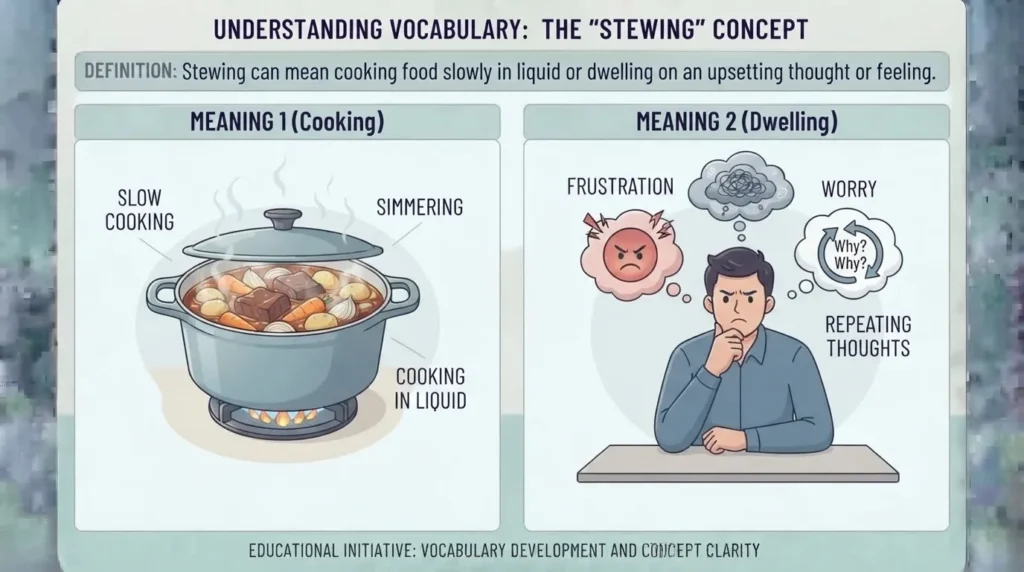
Synonym for stewing help you express deep anger, quiet frustration, or a slow cooking process with absolute precision. Imagine sitting at your office desk after an unfair remark, silently replaying the moment in your mind for hours. That unexpressed, brooding anger represents the exact emotional state of stewing.
Using a synonym for stewing improves your vocabulary and expands your emotional range in daily speech. It allows students, bloggers, and creative writers to describe internal conflict without relying on repetitive phrases. Learning these semantic variations keeps your storytelling dynamic and persuasive.
Words like simmering, brooding, or festering capture subtle shades of unexpressed tension effectively. Content writers and everyday English speakers need precise vocabulary to communicate complex feelings clearly. Mastering a synonym for stewing ensures your writing remains vivid, engaging, and highly relatable.
What Does “Stewing” Really Mean?
The word stewing carries two primary meanings: literally, it refers to cooking food slowly in liquid; metaphorically, it describes a person quietly sulking or nursing silent anger.
Native speakers predominantly use it in a psychological context. It describes a state where someone dwells on a frustration rather than addressing it directly.
Common contexts include workplace disagreements, relationship conflicts, personal setbacks, and culinary descriptions.
- Part of Speech: Verb (Present Participle) / Adjective
- Simple Definition: Cooking slowly in liquid, or quietly dwelling on feelings of anger or frustration.
Connotative Meaning
(Connotation refers to the emotional feeling or cultural association attached to a specific word beyond its dictionary definition.)
- Positive tone: When applied to cooking, it suggests warmth, care, comfort, and rich flavor development.
- Negative tone: In emotional contexts, it implies bitter resentment, unhealthy sulking, and unexpressed hostility.
- Neutral tone: Identifies a slow physical heating process or a state of quiet deliberation.
Etymology and History
The term originates from the Old French word estuver (to bathe, ferment, or steam), which traces back to Vulgar Latin extufare.
- Old English (450–1100): Early forms were absent; Germanic terms focused on direct boiling or steam.
- Middle English (1100–1500): Adopted as stewen, meaning to bathe in a vapor bath or cook meat slowly.
- Modern English (1500–Present): Expanded metaphorically to describe individuals “cooking” in their own angry thoughts.
Syllables and Affixation
- Syllables: stew-ing
- Root: Stew
- Prefix: None
- Suffix: -ing (present participle/gerund suffix)
Synonyms List
1. Simmering
- Meaning: Remaining in a state of suppressed anger or low-level heat.
- Tone/Register: Neutral, Informal
- Example 1: He sat at his desk, simmering over the unfair criticism from his manager.
- Example 2: The soup was simmering gently on the back burner all afternoon.
2. Brooding
- Meaning: Dwelling moodily or sullenly on troublesome thoughts.
- Tone/Register: Literary, Dramatic
- Example 1: She spent the entire evening brooding in her room after the argument.
- Example 2: A dark, brooding atmosphere settled over the quiet room.
3. Festering
- Meaning: Generating increasing bitterness, resentment, or decay over time.
- Tone/Register: Formal, Intense
- Example 1: Unresolved grievances between the neighbors ended up festering for years.
- Example 2: His unexpressed disappointment was festering deep inside his mind.
4. Sulking
- Meaning: Being silent, morose, and bad-tempered out of annoyance or disappointment.
- Tone/Register: Informal, Disapproving
- Example 1: The teenager was sulking in the corner after being denied permission to go out.
- Example 2: Stop sulking and come join the family dinner.
5. Seething
- Meaning: Experiencing intense, barely controlled internal rage.
- Tone/Register: Emphatic, Dramatic
- Example 1: Below her calm expression, she was seething with pure fury.
- Example 2: The angry crowd was seething as the controversial news was announced.
6. Boiling
- Meaning: Reaching a point of extreme heat or fierce, unrestrained anger.
- Tone/Register: Informal, Expressive
- Example 1: His blood was boiling after he read the dishonest message.
- Example 2: The kettle was boiling noisily on the stovetop.
7. Smoldering
- Meaning: Burning slowly with smoke but no flame, or holding hidden rage.
- Tone/Register: Literary, Sensory
- Example 1: Her smoldering anger was obvious from her sharp gaze.
- Example 2: The smoldering embers kept the campsite warm through the night.
8. Fuming
- Meaning: Showing clear, active irritation or distress through expression or posture.
- Tone/Register: Informal, Common
- Example 1: Mark was fuming when he realized his car had been towed away.
- Example 2: She paced back and forth across the lobby, fuming quietly.
9. Chafing
- Meaning: Feeling irritated or impatient due to a restriction or annoyance.
- Tone/Register: Formal, Literary
- Example 1: The ambitious executive was chafing under the strict corporate rules.
- Example 2: He was chafing at the unexpected delay to his travel plans.
10. Fretting
- Meaning: Worrying continuously or feeling anxious about something out of control.
- Tone/Register: Conversational, Gentle
- Example 1: She spent all night fretting over her upcoming presentation results.
- Example 2: Please stop fretting about small details that do not matter.
11. Moping
- Meaning: Wandering around or sitting listlessly in a spiritless, gloomy mood.
- Tone/Register: Informal, Casual
- Example 1: Instead of moping around the house, go out and get some fresh air.
- Example 2: He sat moping on the couch all weekend after his team lost.
12. Ruminating
- Meaning: Thinking deeply and repeatedly about a problem or past event.
- Tone/Register: Academic, Psychological
- Example 1: Psychologists caution against ruminating on past mistakes for too long.
- Example 2: She lay awake for hours, ruminating over her career choices.
13. Agonizing
- Meaning: Suffering great mental worry or severe internal struggle over a decision.
- Tone/Register: Emotional, Serious
- Example 1: He spent days agonizing over whether to accept the job offer abroad.
- Example 2: She was agonizing over the difficult personal choice before her.
14. Pining
- Meaning: Languishing or feeling intense longing combined with quiet melancholy.
- Tone/Register: Literary, Emotional
- Example 1: She was pining for her homeland after months of living overseas.
- Example 2: The lonely dog sat by the window, pining for its owner.
15. Dwellings
- Meaning: Focusing attention continuously on a negative thought or past hurt.
- Tone/Register: General, Educational
- Example 1: Dwelling on old arguments prevents teams from moving forward effectively.
- Example 2: She avoided dwelling on bad memories during her vacation.
16. Churning
- Meaning: Experiencing intense agitation or deep turmoil in one’s stomach or mind.
- Tone/Register: Descriptive, Sensory
- Example 1: Her stomach was churning with anxiety before walking onto the stage.
- Example 2: Thoughts were churning rapidly through his mind during the crisis.
17. Sullen
- Meaning: Showing a brooding, ill-humored silence or gloomy resentment.
- Tone/Register: Descriptive, Formal
- Example 1: The team remained sullen after receiving the harsh performance review.
- Example 2: A sullen quiet fell over the classroom following the announcement.
18. Smarting
- Meaning: Experiencing a sharp, stinging pain or persistent mental hurt from an insult.
- Tone/Register: Expressive, Informal
- Example 1: He was still smarting from the rejection letter he received yesterday.
- Example 2: Her pride was smarting after failing the driving test publicly.
19. Irked
- Meaning: Feeling mildly irritated, annoyed, or exasperated by a repetitive issue.
- Tone/Register: Casual, Daily
- Example 1: She felt thoroughly irked by his constant interruptions during meetings.
- Example 2: The long delay irked every passenger waiting at the gate.
20. Resenting
- Meaning: Feeling deep, persistent bitterness about a perceived unfairness or injury.
- Tone/Register: Serious, Psychological
- Example 1: He could not stop resenting his colleague for taking credit for his work.
- Example 2: Resenting others only harms your own mental health over time.
21. Braising
- Meaning: Cooking food slowly in a closed container with liquid and heat.
- Tone/Register: Technical, Culinary
- Example 1: The chef spent the morning braising tough cuts of meat for dinner.
- Example 2: Braising root vegetables brings out their natural sweetness nicely.
22. Poaching
- Meaning: Cooking gently in hot liquid kept just below the boiling point.
- Tone/Register: Culinary, Professional
- Example 1: She mastered poaching fresh eggs to perfection for weekend breakfast.
- Example 2: Poaching pears in fruit juice creates an elegant dessert option.
23. Cursing
- Meaning: Uttering angry words internally or externally out of deep frustration.
- Tone/Register: Informal, Intense
- Example 1: He was silently cursing his bad luck as rain started falling.
- Example 2: She stood in traffic, cursing the unexpected road closure.
24. Pouting
- Meaning: Pushing out one’s lips in a childish expression of annoyance or disappointment.
- Tone/Register: Informal, Casual
- Example 1: The child began pouting when he was told to turn off the game.
- Example 2: Stop pouting and help us unpack the groceries.
25. Steam-cooking
- Meaning: Cooking food using the heat generated by rising hot vapor.
- Tone/Register: Culinary, General
- Example 1: Steam-cooking fresh vegetables helps preserve their natural nutrients.
- Example 2: She prefers steam-cooking dumplings over deep-frying them.
26. Simmering-down
- Meaning: Gradually cooling off in temperature or calming down after anger.
- Tone/Register: Conversational, Idiomatic
- Example 1: Give him a few minutes to simmer down before approaching him again.
- Example 2: The heated debate was finally simmering down as consensus grew.
27. Stewing-over
- Meaning: Agonizing over or continuously processing a specific troubling thought.
- Tone/Register: Informal, Phrasal
- Example 1: She spent hours stewing over the wording of her email response.
- Example 2: Stop stewing over past errors and focus on your next goal.
28. Simmering-over
- Meaning: Reaching a point where quiet frustration begins to overflow into action.
- Tone/Register: Informal, Idiomatic
- Example 1: His hidden frustration was simmering-over into open defiance at work.
- Example 2: The long dispute was simmering-over into a full legal battle.
29. Simmering-with
- Meaning: Holding an intense internal emotion that remains barely concealed.
- Tone/Register: Descriptive, Literary
- Example 1: She returned home simmering-with excitement about her new job.
- Example 2: His tone was calm, but he was simmering with indignation.
30. Morose
- Meaning: Sullen, gloomy, and ill-tempered in disposition or mood.
- Tone/Register: Formal, Literary
- Example 1: After hearing the bad news, he sank into a morose state.
- Example 2: Her morose silence made everyone at the table feel uneasy.
31. Glooming
- Meaning: Appearing or feeling dark, somber, or depressed in spirit.
- Tone/Register: Poetic, Archaic
- Example 1: Shadows were glooming over the valley as night approached slowly.
- Example 2: He spent the afternoon glooming over his financial losses.
32. Soreness
- Meaning: Carrying lingering emotional pain, resentment, or physical discomfort.
- Tone/Register: Informal, General
- Example 1: There was still some lingering soreness between the former business partners.
- Example 2: Her emotional soreness faded as she made new friends.
33. Distressed
- Meaning: Suffering from acute anxiety, sorrow, or emotional pain.
- Tone/Register: Formal, Professional
- Example 1: The client was noticeably distressed by the unexpected project delay.
- Example 2: She received a distressed call from her sister late last night.
34. Perturbed
- Meaning: Feeling anxious, unsettled, or bothered by an unexpected situation.
- Tone/Register: Formal, Business
- Example 1: The board members were deeply perturbed by the drop in quarterly earnings.
- Example 2: He looked perturbed when his authority was questioned during the meeting.
35. Agitated
- Meaning: Feeling physically or mentally restless, nervous, or disturbed.
- Tone/Register: General, Clinical
- Example 1: The speaker grew agitated when audience members began talking over him.
- Example 2: She paced the hallway with an agitated expression on her face.
36. Disgruntled
- Meaning: Displeased, discontented, and harboring a sense of grievance.
- Tone/Register: Professional, Formal
- Example 1: Management held a meeting to address the complaints of disgruntled employees.
- Example 2: A disgruntled customer left a critical review on the website.
37. Vexed
- Meaning: Annoyed, frustrated, or worried by a troublesome or complex problem.
- Tone/Register: Literary, Formal
- Example 1: Scientists remain vexed by the unusual results of the experiment.
- Example 2: She was thoroughly vexed by the ongoing administrative confusion.
38. Offended
- Meaning: Feeling hurt, resentful, or angry due to a perceived insult.
- Tone/Register: Common, General
- Example 1: He was deeply offended by the insensitive remarks made at dinner.
- Example 2: She looked offended when her proposal was dismissed without review.
39. Bitter
- Meaning: Harboring deep, long-term anger or disappointment from hurt experiences.
- Tone/Register: Emotional, Serious
- Example 1: Years of harsh treatment made him bitter toward his former employers.
- Example 2: Avoid growing bitter when facing temporary personal setbacks.
40. Peeved
- Meaning: Feeling annoyed or irritated over a small, minor inconvenience.
- Tone/Register: Informal, Casual
- Example 1: She was peeved that her colleague forgot to save the shared document.
- Example 2: He looked peeved when he missed his regular morning train.
41. Grumbling
- Meaning: Complaining in a low, muttered, dissatisfied tone of voice.
- Tone/Register: Casual, Common
- Example 1: Staff members were grumbling about the new office attendance policy.
- Example 2: He walked away, grumbling under his breath about the weather.
42. Grouching
- Meaning: Expressing discontent or complaining habitually about minor issues.
- Tone/Register: Informal, Colloquial
- Example 1: Stop grouching about the food and enjoy the evening party.
- Example 2: He spent the morning grouching about his heavy workload.
43. Simmering-hostility
- Meaning: Maintaining a quiet, unexpressed state of conflict or enmity.
- Tone/Register: Formal, Analytical
- Example 1: A climate of simmering hostility developed between the two competing departments.
- Example 2: Diplomats worked tirelessly to reduce the simmering hostility between nations.
44. Internalizing
- Meaning: Keeping emotional pain or anger within oneself instead of expressing it.
- Tone/Register: Academic, Psychological
- Example 1: Internalizing stress often leads to physical fatigue and poor focus.
- Example 2: Rather than confronting her friend, she kept internalizing her disappointment.
45. Boiling-over
- Meaning: Losing control of suppressed anger and bursting out in anger.
- Tone/Register: Expressive, Conversational
- Example 1: After weeks of silence, his frustration was finally boiling over.
- Example 2: The calm debate ended up boiling over into a shouting match.
46. Infuriated
- Meaning: Extremely angry or filled with intense rage over an action.
- Tone/Register: Strong, Formal
- Example 1: She was infuriated by the blatant disregard for the safety guidelines.
- Example 2: The sudden decision infuriated residents across the district.
47. Boiling-under
- Meaning: Maintaining intense anger that remains carefully concealed beneath the surface.
- Tone/Register: Literary, Figurative
- Example 1: Beneath his quiet smile, a wave of resentment was boiling-under.
- Example 2: The peaceful atmosphere hid the anger boiling under the community.
48. Displeased
- Meaning: Feeling dissatisfied, annoyed, or unhappy with an outcome.
- Tone/Register: Formal, Professional
- Example 1: The manager was displeased with the inaccurate report details.
- Example 2: She looked displeased when the event was unexpectedly postponed.
49. Steamed
- Meaning: Being extremely angry, annoyed, or agitated about a situation.
- Tone/Register: Informal, Slang
- Example 1: He was completely steamed after getting a parking ticket wrongly.
- Example 2: She got steamed when her computer crashed without saving.
50. Simmering-fury
- Meaning: Holding a dangerous, controlled state of intense anger inside.
- Tone/Register: Dramatic, Literary
- Example 1: He stared at his rival with an expression of pure simmering-fury.
- Example 2: Her quiet voice barely concealed the simmering fury she felt.
51. Chafed
- Meaning: Feeling worn down, annoyed, or irritated by persistent pressure.
- Tone/Register: Formal, Literary
- Example 1: She felt chafed by the constant demands of her micromanaging boss.
- Example 2: Citizens chafed under the restrictive temporary curfew regulations.
52. Sore
- Meaning: Upset, annoyed, or harboring lingering bad feelings about an event.
- Tone/Register: Informal, Daily
- Example 1: Don’t get sore just because you lost a friendly game.
- Example 2: He was still sore about not receiving an invitation to the party.
53. Agitated-state
- Meaning: A condition characterized by restless anxiety or emotional instability.
- Tone/Register: Clinical, Formal
- Example 1: The patient remained agitated throughout the medical evaluation.
- Example 2: She tried deep breathing exercises to exit her agitated state.
54. Slow-burning
- Meaning: Developing gradually and quietly over a long duration of time.
- Tone/Register: Descriptive, General
- Example 1: Their rivalry was a slow-burning conflict that lasted decades.
- Example 2: The movie builds tension through a slow-burning plot line.
55. Heated
- Meaning: Marked by strong emotion, intense passion, or angry debate.
- Tone/Register: Common, Media
- Example 1: They engaged in a heated discussion regarding the new budget allocations.
- Example 2: The atmosphere grew heated as opposing sides voiced their concerns.
56. Exasperated
- Meaning: Annoyed to the point of complete helplessness or frustration.
- Tone/Register: Expressive, General
- Example 1: The teacher threw up her hands in an exasperated gesture.
- Example 2: He felt exasperated after explaining the instructions five separate times.
57. Resentful
- Meaning: Full of bitter hurt or anger about unfair treatment.
- Tone/Register: Serious, Psychological
- Example 1: She felt resentful toward her siblings for receiving special treatment.
- Example 2: A resentful attitude can damage long-term personal relationships.
58. Incensed
- Meaning: Enraged or extremely angry at an unjust or cruel action.
- Tone/Register: Formal, Intense
- Example 1: Citizens were incensed by the corruption scandal involving public officials.
- Example 2: She was incensed that her private correspondence had been leaked.
59. Boiling point
- Meaning: The stage where anger or conflict can no longer be contained.
- Tone/Register: Common, Idiomatic
- Example 1: Workplace tension reached a boiling point during the staff meeting.
- Example 2: His patience finally hit its boiling point after hours of waiting.
60. Pondering-anger
- Meaning: Weighing and processing feelings of rage in a reflective manner.
- Tone/Register: Descriptive, Psychological
- Example 1: He spent the quiet drive home pondering-anger over his choice of words.
- Example 2: Pondering-anger without taking constructive action leads to mental exhaustion.
Synonyms by Tone
Choosing the proper synonym for stewing depends on the emotional depth and formal register of your context.
Positive Synonyms (Culinary / Warm Contexts)
- Simmering: Suggests gentle, slow preparation that enhances flavor and quality.
- Braising: A professional cooking term that connotes warmth, patience, and rich culinary care.
- Poaching: Implies delicate, precise, and gentle cooking methods.
Neutral Synonyms
- Ruminating: A psychological description of continuous mental processing without negative bias.
- Slow-burning: Describes gradual development across time without emotional judgment.
- Intermediate processing: Technical description of processing thoughts or cooking stages.
Negative Synonyms (Emotional Conflict)
- Seething: Indicates dangerous, barely suppressed rage ready to explode.
- Festering: Suggests anger that is rotting and worsening over extended periods.
- Sulking: Implies immature, moody silence following a petty disappointment.
- Resenting: Describes deep-seated, bitter dissatisfaction over perceived slights.
Playful or Informal Synonyms
- Moping: A casual term for visibly feeling sorry for oneself.
- Peeved: A lighthearted way to express minor, temporary annoyance.
- Steamed: A colorful, informal expression describing someone who is visibly angry.
Mini Comparison: Close Alternatives
“Stewing” vs. “Brooding” vs. “Seething”
| Feature | Stewing | Brooding | Seething |
| Core Focus | Unexpressed, dwelling anger | Moody, dark, reflective anxiety | Intense, boiling rage near explosion |
| Intensity | Moderate to High | Low to Moderate | Extremely High |
| Visibility | Quiet, inward focus | Melancholic, visible posture | Tense, barely controlled expression |
- When to use Stewing: Use when someone is quietly holding onto frustration after a specific event.
- When to use Brooding: Use when a person is wrapped up in dark, gloomy, reflective thoughts over time.
- When to use Seething: Use when someone is experiencing fierce, intense rage that they are struggling to hold back.
Context-Based Usage
Daily Conversation
In casual chats, native speakers prefer accessible, informal terms like stewing, fuming, moping, or steamed.
- Example: “Don’t sit there moping all afternoon just because we missed the movie.”
Professional Writing & Business
In professional settings, emotional vocabulary should remain objective, precise, and calm. Words like perturbed, disgruntled, displeased, or ruminating fit well.
- Example: “Management addressed the concerns raised by disgruntled clients promptly.”
Academic & Research Contexts
Academic publications use formal psychological terms rather than figurative language. Opt for ruminating, internalizing, distressed, or agitated.
- Example: “Studies show that ruminating on negative workplace events increases stress levels.”
Common Mistakes & Native Usage
- Mistake 1: Using “stewing” for active, violent shouting.
- Incorrect: “He was stewing at the referee, yelling loudly from the stands.”
- Correct: “He was stewing in the stands, quietly glaring at the referee.”
- Mistake 2: Confusing “brooding” with simple culinary stewing.
- Note: Brooding is strictly psychological and can never be used to describe cooking food.
- Mistake 3: Overusing “steamed” in formal writing.
- Note: Steamed is informal slang when used emotionally; replace it with displeased or incensed in essays.
Real-Life Scenarios
Workplace
A designer receives harsh, public critique during a design review. Rather than arguing immediately, he spends the rest of the afternoon stewing at his desk, analyzing every word said.
Social Situations
After being left out of dinner plans, a friend turns quiet during a group chat. She remains sullen and responds with short, one-word text messages.
Media and Pop Culture
In drama series, main characters are often shown brooding in rain-slicked streets or dark rooms, building emotional tension before making pivotal decisions.
Conclusion
Expanding your range of English vocabulary allows you to express subtle differences in human emotion with confidence. Learning precise terms like brooding, seething, or ruminating elevates both your spoken and written expression.
Practicing new words in real-life contexts is the fastest way to turn passive knowledge into natural communication habits. Try introducing these expressive options into your daily conversations, essays, and emails today.
Regularly using a synonym for stewing enriches your narrative tone and makes your writing more compelling. Embrace these versatile terms to communicate feelings with clarity and impact.
Interactive Practice Quiz
Test your understanding of synonyms for stewing with these scenario-based questions:
Part 1
1. Which word is closest in meaning to “stewing” when cooking?
A) Simmering
B) Freezing
C) Drying
D) Chopping
2. What does “stewing” usually involve?
A) Cooking food slowly in liquid
B) Cooking food without heat
C) Freezing food quickly
D) Serving raw food
3. Which word can replace “stewing” in a cooking context?
A) Slow-cooking
B) Cutting
C) Baking
D) Grinding
4. Which word means cooking food gently in liquid?
A) Simmering
B) Roasting
C) Toasting
D) Frying
5. Which cooking method is most closely related to stewing?
A) Braising
B) Freezing
C) Grilling
D) Drying
6. Which phrase best describes stewing meat?
A) Cooking it slowly in liquid
B) Cooking it quickly over a flame
C) Serving it raw
D) Cooling it in water
7. Which word is NOT a synonym for stewing in cooking?
A) Simmering
B) Slow-cooking
C) Braising
D) Freezing
8. “The vegetables are stewing in the pot.” What does this mean?
A) They are cooking slowly in liquid.
B) They are being frozen.
C) They are being eaten raw.
D) They are drying in the sun.
9. Which word best describes food that cooks slowly in a covered pot?
A) Stewing
B) Freezing
C) Slicing
D) Grinding
10. Which synonym best fits this sentence? “She spent hours stewing the beef.”
A) Simmering
B) Washing
C) Chopping
D) Freezing
Part 2
11. When a person is “stewing” over a problem, they are usually:
A) Thinking about it repeatedly
B) Forgetting it completely
C) Celebrating it
D) Avoiding all thoughts
12. Which word can mean “stewing” when someone feels angry?
A) Fuming
B) Laughing
C) Relaxing
D) Smiling
13. Which word means thinking deeply or repeatedly about something upsetting?
A) Brooding
B) Dancing
C) Celebrating
D) Resting
14. “He sat alone, stewing over the argument.” What does “stewing” mean here?
A) Dwelling on the argument
B) Cooking dinner
C) Cleaning the room
D) Forgetting the argument
15. Which word is closest to “stewing” in the sentence “She was stewing with anger”?
A) Seething
B) Relaxing
C) Smiling
D) Sleeping
16. Which word means repeatedly thinking about something negative?
A) Ruminating
B) Celebrating
C) Ignoring
D) Entertaining
17. Which synonym best replaces “stewing” in this sentence?
“He kept stewing over his mistake.”
A) Dwelling
B) Forgetting
C) Enjoying
D) Celebrating
✅ Answer Key
- A — Simmering
- A — Cooking food slowly in liquid
- A — Slow-cooking
- A — Simmering
- A — Braising
- A — Cooking it slowly in liquid
- D — Freezing
- A — They are cooking slowly in liquid.
- A — Stewing
- A — Simmering
- A — Thinking about it repeatedly
- A — Fuming
- A — Brooding
- A — Dwelling on the argument
- A — Seething
- A — Ruminating
- A — Dwelling
Frequently Asked Questions
What is the most common synonym for stewing in daily speech?
The most common casual synonyms are fuming, simmering, and brooding. In culinary contexts, simmering and braising are the most widely used equivalents.
Can stewing have a positive meaning?
In emotional contexts, stewing is almost always negative as it implies brooding or sulking. However, in cooking contexts, it is neutral or positive, describing the slow preparation of rich, flavorful dishes.
What is the difference between stewing and fuming?
While both describe anger, stewing emphasizes quiet, internal dwelling over time. Fuming implies more visible signs of agitation, such as pacing, heavy breathing, or sharp gestures.
Which formal word should I use instead of stewing in an essay?
In formal or academic essays, replace stewing with ruminating, internalizing stress, harboring resentment, or experiencing agitation, depending on the precise emotional focus.
Is stewing considered a slang word?
No, stewing is standard English. However, using it to mean “brooding in anger” is an established metaphorical usage derived from its original physical cooking definition.
How does seething differ from stewing?
Seething indicates a much higher level of emotional intensity than stewing. Someone who is seething is experiencing near-explosive rage, whereas someone stewing is quietly processing resentment.
What is a good culinary synonym for stewing?
Great culinary synonyms include braising, simmering, slow-cooking, and poaching. Each term describes preparing ingredients gently in warm liquid over extended periods.

Sophia Carter is the founder and lead writer at SynonymVerse.com, a trusted online resource dedicated to English vocabulary and effective communication. She is passionate about helping students, writers, professionals, and lifelong learners find the most accurate words to express their ideas with clarity and confidence.
At SynonymVerse.com, every article is carefully researched and thoughtfully written to provide reliable guidance on synonyms, word meanings, and vocabulary. With a strong focus on accuracy, real-world usage, and easy-to-understand explanations, the website is committed to helping readers strengthen their language skills, enrich their vocabulary, and become more confident communicators.