
Finding the right words can make your writing clearer and more engaging. If you are looking for a synonym for speaker, there are many alternatives that can fit different situations and meanings.
The word “speaker” can refer to someone who gives a speech, presents information, communicates ideas, or represents a group. Depending on the context, words such as orator, presenter, lecturer, and spokesman may work well.
Using a synonym for speaker can help you avoid repetition and make your sentences more natural. Each alternative may have a slightly different meaning, so choosing the right word is important.
In this guide, we will explore common alternatives and their meanings. Whether you are writing an article, speech, or professional content, you can find a suitable synonym for speaker for your needs.
What Does “Speaker” Really Mean?
Speaker refers to a person who delivers a speech, addresses an audience, or conducts a conversation. It can also describe an electronic device that outputs audio.
Native speakers understand the word as versatile, direct, and universally applicable. It appears often in event schedules, academic settings, audio reviews, and everyday dialogue.
- Part of Speech: Noun
- Definition: A person who speaks or addresses an audience; an electronic sound-producing device.
Connotative Meaning
Words related to speaker carry distinct emotional tones:
- Positive tone: Implies eloquence, authority, leadership, or inspiration (e.g., orator, lecturer, keynote presenter).
- Negative tone: Implies excessive talking, rambling, or harsh rhetoric (e.g., demagogue, windbag, rabble-rouser).
- Neutral tone: Simply denotes an individual making vocal sounds or providing audio output (e.g., spokesperson, announcer, loudspeaker).
What is connotation? (Connotation refers to the implicit emotional feeling, cultural association, or secondary meaning that a word carries alongside its explicit, literal definition.)
Etymology
- Speaker: Derived from the Middle English word speker, which comes from Old English sprecere (meaning one who speaks).
Historical Context
- Old English (450–1100): Sprecere described anyone uttering spoken words.
- Middle English (1100–1500): Speker began denoting formal roles, such as parliamentary leaders.
- Modern English (1500–Present): The noun expanded to include audio equipment and formal event presenters.
Pronunciation & Word Structure
- US IPA: /ˈspiː.kɚ/
- UK IPA: /ˈspiː.kər/
- Syllables: speak-er (two syllables)
Affixation Pattern
- Root: Speak (to utter words)
- Prefix: None
- Suffix: -er (noun suffix denoting an agent who acts)
Synonyms for Speaker
Orator (Noun) — US: /ˈɔːr.ə.t̬ɚ/ | UK: /ˈɒr.ə.tər/
- Meaning: A public speaker who is exceptionally eloquent and skilled in rhetoric.
- Tone/Register: Formal, Admiring
- Example 1: The guest orator inspired the crowd with his passionate words.
- Example 2: She became a famous orator through years of dedicated debate practice.
Spokesperson (Noun) — US: /ˈspoʊksˌpɝː.sən/ | UK: /ˈspəʊksˌpɜː.sən/
- Meaning: A person chosen to speak on behalf of an organization or group.
- Tone/Register: Business, Official
- Example 1: The company spokesperson answered questions during the press conference.
- Example 2: They hired a new spokesperson to manage public relations.
Lecturer (Noun) — US: /ˈlek.tʃɚ.ɚ/ | UK: /ˈlek.tʃər.ər/
- Meaning: A person who delivers an educational talk to an audience or class.
- Tone/Register: Academic, Formal
- Example 1: The visiting lecturer shared new research on environmental science.
- Example 2: Our biology lecturer explained the cell cycle very clearly.
Presenter (Noun) — US: /prɪˈzen.t̬ɚ/ | UK: /prɪˈzen.tər/
- Meaning: A person who formally introduces or leads a talk, broadcast, or display.
- Tone/Register: Professional, Universal
- Example 1: The conference presenter showed helpful slides to support her point.
- Example 2: A television presenter walked onto the stage to announce the winner.
Announcer (Noun) — US: /əˈnaʊn.sɚ/ | UK: /əˈnaʊn.sər/
- Meaning: A person who gives information over a public address system or broadcast.
- Tone/Register: Clear, Direct
- Example 1: The stadium announcer called out the starting lineup before the match.
- Example 2: An airport announcer updated passengers on the flight delay.
Keynote Speaker (Noun) — US: /ˈkiː.noʊt ˈspiː.kɚ/ | UK: /ˈkiː.nəʊt ˈspiː.kər/
- Meaning: The main speaker at a gathering who sets the primary underlying tone.
- Tone/Register: Professional, Prestigious
- Example 1: The keynote speaker delivered an encouraging speech about innovation.
- Example 2: Organizers invited an industry leader as their keynote speaker.
Talker (Noun) — US: /ˈtɑː.kɚ/ | UK: /ˈtɔː.kər/
- Meaning: A person who speaks or talks, especially in a specified manner.
- Tone/Register: Casual, Everyday
- Example 1: My grandfather is a fast talker who loves telling long stories.
- Example 2: She is known as a smooth talker in sales meetings.
Spokesman (Noun) — US: /ˈspoʊks.mən/ | UK: /ˈspəʊks.mən/
- Meaning: A male person designated to speak on behalf of others.
- Tone/Register: Official, Traditional
- Example 1: The police spokesman delivered a statement regarding the incident.
- Example 2: He served as the chief spokesman for the local committee.
Spokeswoman (Noun) — US: /ˈspoʊksˌwʊm.ən/ | UK: /ˈspəʊksˌwʊm.ən/
- Meaning: A female person designated to speak on behalf of others.
- Tone/Register: Official, Professional
- Example 1: A spokeswoman for the hospital confirmed the patient was stable.
- Example 2: The firm appointed a spokeswoman to handle media inquiries.

Communicator (Noun) — US: /kəˈmjuː.nə.keɪ.t̬ɚ/ | UK: /kəˈmjuː.nɪ.keɪ.tər/
- Meaning: A person who conveys information, ideas, or feelings effectively.
- Tone/Register: Positive, Professional
- Example 1: Good leaders must be clear communicators in times of change.
- Example 2: She is a skilled communicator who connects easily with audiences.
Broadcaster (Noun) — US: /ˈbrɑːdˌkæs.t̬ɚ/ | UK: /ˈbrɔːdˌkɑː.stər/
- Meaning: A presenter on radio, television, or digital internet channels.
- Tone/Register: Media, Professional
- Example 1: The veteran broadcaster hosted the evening news program.
- Example 2: Many digital creators work full-time as radio broadcasters.
Narrator (Noun) — US: /ˈnær.eɪ.t̬ɚ/ | UK: /nəˈreɪ.tər/
- Meaning: A person who tells a story or provides commentary for a film or book.
- Tone/Register: Literary, Creative
- Example 1: The documentary narrator had a deep, soothing voice.
- Example 2: An audiobook narrator brings different story characters to life.
Rhetorician (Noun) — US: /ˌret.əˈrɪʃ.ən/ | UK: /ˌret.əˈrɪʃ.ən/
- Meaning: An expert in formal speaking, debate, and persuasive language.
- Tone/Register: Academic, High-Formal
- Example 1: The ancient rhetorician taught students how to construct strong arguments.
- Example 2: Critics praised the politician as a master rhetorician.
Debater (Noun) — US: /dɪˈbeɪ.t̬ɚ/ | UK: /dɪˈbeɪ.tər/
- Meaning: A person who takes part in formal arguments or organized discussions.
- Tone/Register: Intellectual, Competitive
- Example 1: The high school debater presented clear counterarguments during the round.
- Example 2: She proved to be a formidable debater in parliament.
Preacher (Noun) — US: /ˈpriː.tʃɚ/ | UK: /ˈpriː.tʃər/
- Meaning: A person who delivers sermons or moral talks, typically in a religious setting.
- Tone/Register: Religious, Moral
- Example 1: The preacher delivered an inspiring sermon on community kindness.
- Example 2: Members listened attentively as the preacher shared his message.
Speechmaker (Noun) — US: /ˈspiːtʃˌmeɪ.kɚ/ | UK: /ˈspiːtʃˌmeɪ.kər/
- Meaning: A person who gives formal public speeches on regular occasions.
- Tone/Register: Descriptive, Traditional
- Example 1: The political speechmaker addressed the crowd at the city hall rally.
- Example 2: He was a skilled speechmaker who knew how to persuade voters.
Panellist (Noun) — US: /ˈpæn.əl.ɪst/ | UK: /ˈpæn.əl.ɪst/
- Meaning: A member of a group gathered to discuss a topic publicly.
- Tone/Register: Business, Academic
- Example 1: Each panellist offered a unique perspective on technology trends.
- Example 2: The moderator asked the panellist a direct question.
Voice-Over Artist (Noun) — US: /ˈvɔɪsˌoʊ.vɚ ˈɑːr.t̬ɪst/ | UK: /ˈvɔɪsˌəʊ.vər ˈɑː.tɪst/
- Meaning: A performer who provides spoken commentary off-screen for media.
- Tone/Register: Commercial, Creative
- Example 1: The voice-over artist recorded lines for the new animated film.
- Example 2: Commercials often hire a professional voice-over artist.
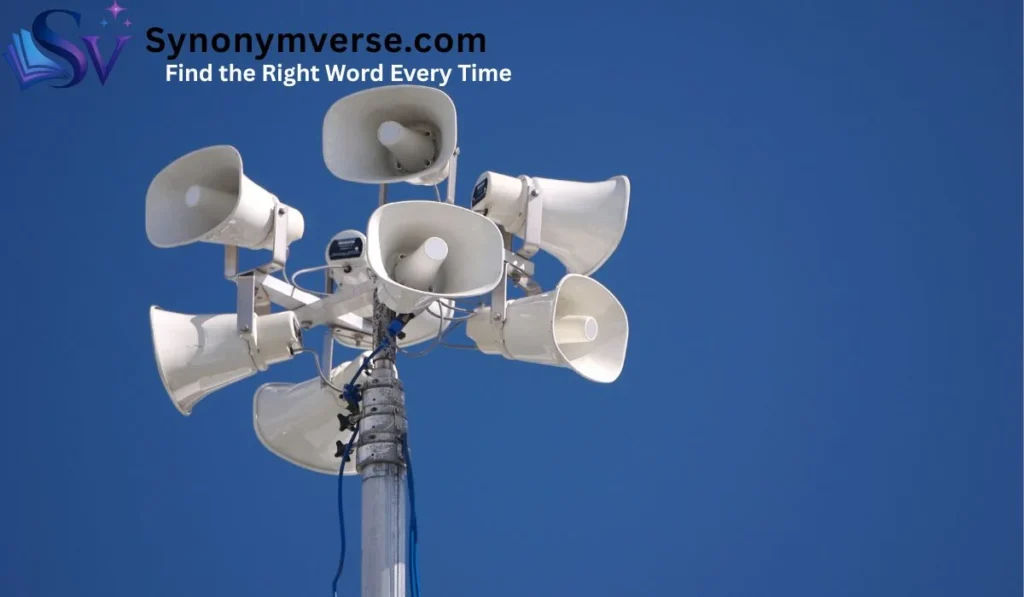
Loudspeaker (Noun) — US: /ˌlaʊdˈspiː.kɚ/ | UK: /ˌlaʊdˈspiː.kər/
- Meaning: An electronic apparatus that converts electrical signals into audible sound.
- Tone/Register: Technical, Neutral
- Example 1: Sound echoed from the loudspeaker placed above the field.
- Example 2: The school installed a new loudspeaker in every classroom.
Woofers (Noun) — US: /ˈwʊf.ɚz/ | UK: /ˈwʊf.əz/
- Meaning: Loudspeakers designed specifically to reproduce low audio frequencies.
- Tone/Register: Technical, Audio-Specific
- Example 1: Heavy bass shakes the room when the woofers activate.
- Example 2: High-end stereo systems include powerful woofers for deep sound.
Tweeter (Noun) — US: /ˈtwiː.t̬ɚ/ | UK: /ˈtwiː.tər/
- Meaning: A small loudspeaker designed to reproduce high audio frequencies.
- Tone/Register: Technical, Audio-Specific
- Example 1: Clear treble sounds come directly from the small tweeter.
- Example 2: The studio monitor uses a dome tweeter for crisp audio.
Sound Box (Noun) — US: /ˈsaʊnd ˌbɑːks/ | UK: /ˈsaʊnd ˌbɒks/
- Meaning: A hollow chamber or enclosure that amplifies acoustic or electric sound.
- Tone/Register: Informal, Descriptive
- Example 1: Connect your phone to the portable sound box for music.
- Example 2: The guitar body acts as a natural sound box.
Transducer (Noun) — US: /trænˈsduː.sɚ/ | UK: /trænzˈdjuː.sər/
- Meaning: A device that converts energy from one form to another, such as electrical to acoustic.
- Tone/Register: Scientific, Engineering
- Example 1: The acoustic transducer converts signal data into sound waves.
- Example 2: Engineers tested the new ultrasonic transducer in the lab.
Addresser (Noun) — US: /əˈdres.ɚ/ | UK: /əˈdres.ər/
- Meaning: The person who speaks to or addresses an audience or recipient.
- Tone/Register: Academic, Formal
- Example 1: Linguists analyze the relation between the addresser and receiver.
- Example 2: The addresser stepped up to the microphone to begin the session.
Demagogue (Noun) — US: /ˈdem.ə.ɡɑːɡ/ | UK: /ˈdem.ə.ɡɒɡ/
- Meaning: A speaker who gains support by appealing to popular desires and prejudices.
- Tone/Register: Critical, Political
- Example 1: Historians described the leader as a dangerous demagogue.
- Example 2: The public rejected the demagogue’s divisive speech.
Rabble-Rouser (Noun) — US: /ˈræb.əlˌraʊ.zɚ/ | UK: /ˈræb.əlˌraʊ.zər/
- Meaning: A person who makes speeches intended to inflame emotions or crowds.
- Tone/Register: Informal, Critical
- Example 1: Security removed the rabble-rouser from the peaceful gathering.
- Example 2: He was accused of being a rabble-rouser during protests.
Toastmaster (Noun) — US: /ˈtoʊstˌmæs.t̬ɚ/ | UK: /ˈtəʊstˌmɑː.stər/
- Meaning: A person who presides over formal dinners and introduces speakers.
- Tone/Register: Ceremonial, Traditional
- Example 1: The toastmaster introduced each guest before dinner began.
- Example 2: Joining a local club helps you practice as a toastmaster.
Expositor (Noun) — US: /ɪkˈspɑː.zə.t̬ɚ/ | UK: /ɪkˈspɒz.ɪ.tər/
- Meaning: A person who explains or interprets complex ideas and texts.
- Tone/Register: Scholarly, High-Formal
- Example 1: The professor was a brilliant expositor of ancient history.
- Example 2: As an expositor, she broke down difficult theories easily.
Interlocutor (Noun) — US: /ˌɪn.t̬ɚˈlɑː.kjə.t̬ɚ/ | UK: /ˌɪn.təˈlɒk.jə.tər/
- Meaning: A person who takes part in a dialogue or conversation.
- Tone/Register: Formal, Academic
- Example 1: He remained a polite interlocutor during the debate.
- Example 2: The diplomat spoke clearly to his foreign interlocutor.
Proclaimer (Noun) — US: /prəˈkleɪ.mɚ/ | UK: /prəˈkleɪ.mər/
- Meaning: A person who announces or declares something publicly and officially.
- Tone/Register: Dramatic, Formal
- Example 1: Herald proclaimers announced the new royal decree to citizens.
- Example 2: She stood as a brave proclaimer of truth in her writing.
Conversationist (Noun) — US: /ˌkɑːn.vɚˈseɪ.ʃən.ɪst/ | UK: /ˌkɒn.vəˈseɪ.ʃən.ɪst/
- Meaning: A person who enjoys and excels at engaging in spoken dialogue.
- Tone/Register: Polite, Social
- Example 1: She is a delightful conversationist who keeps dinner guests engaged.
- Example 2: An adept conversationist knows how to listen as much as talk.
Discussant (Noun) — US: /dɪˈskʌs.ənt/ | UK: /dɪˈskʌs.ənt/
- Meaning: A person who takes part in a formal academic or professional discussion.
- Tone/Register: Academic, Professional
- Example 1: The seminar assigned a discussant to respond to each research paper.
- Example 2: Our lead discussant highlighted key insights from the panel talk.
Monologist (Noun) — US: /ˈmɑː.nə.lɑː.dʒɪst/ | UK: /ˈmɒn.ə.lɒɡ.ɪst/
- Meaning: A speaker who delivers a long speech alone or dominates conversation.
- Tone/Register: Literary, Descriptive
- Example 1: The solo monologist held the theater audience spellbound for an hour.
- Example 2: Avoid being a monologist when networking at professional events.
Declaimer (Noun) — US: /dɪˈkleɪ.mɚ/ | UK: /dɪˈkleɪ.mər/
- Meaning: A person who recites verse or speeches passionately or dramatically.
- Tone/Register: Dramatic, Expressive
- Example 1: The declaimer recited classical poetry with intense emotion.
- Example 2: She listened to the theatrical declaimer captivate the park visitors.
Megaphone (Noun) — US: /ˈmeɡ.ə.foʊn/ | UK: /ˈmeɡ.ə.fəʊn/
- Meaning: A portable, funnel-shaped acoustic horn used to amplify the voice.
- Tone/Register: Practical, Descriptive
- Example 1: The coach shouted instructions through a loud megaphone.
- Example 2: Organizers used a megaphone to direct crowds toward the exit.
Sound System (Noun) — US: /ˈsaʊnd ˌsɪs.təm/ | UK: /ˈsaʊnd ˌsɪs.təm/
- Meaning: A set of electronic equipment used to reproduce or amplify sound.
- Tone/Register: Everyday, Audio-Specific
- Example 1: The venue installed a modern sound system for live musical acts.
- Example 2: Check the sound system connections before the presentation begins.
PA System (Noun) — US: /ˌpiːˈeɪ ˌsɪs.təm/ | UK: /ˌpiːˈeɪ ˌsɪs.təm/
- Meaning: A public address system featuring amplifiers and audio speakers.
- Tone/Register: Commercial, Technical
- Example 1: The principal made morning announcements over the school PA system.
- Example 2: Test the PA system audio levels before attendees enter the hall.
Horn (Noun) — US: /hɔːrn/ | UK: /hɔːn/
- Meaning: An acoustic device or mechanical speaker shaped like a funnel to project sound.
- Tone/Register: Functional, Mechanical
- Example 1: The stadium horn sounded loudly to signal the end of the quarter.
- Example 2: Ships rely on a fog horn to warn nearby vessels in heavy mist.
Subwoofer (Noun) — US: /ˈsʌbˌwʊf.ɚ/ | UK: /ˈsʌbˌwʊf.ər/
- Meaning: A specialized loudspeaker made to reproduce extremely low bass frequencies.
- Tone/Register: Audio-Technical, Modern
- Example 1: The movie theater installed a subwoofer for deep sound impacts.
- Example 2: Adjust the subwoofer settings to ensure clean audio output.
Public Speaker (Noun) — US: /ˌpʌb.lɪk ˈspiː.kɚ/ | UK: /ˌpʌb.lɪk ˈspiː.kər/
- Meaning: An individual who delivers formal talks to audiences on specific topics.
- Tone/Register: Professional, Universal
- Example 1: She works full-time as a professional public speaker in business.
- Example 2: Practice helps any public speaker overcome stage nervousness.
Synonyms for Speaker by Tone
Positive Tone
- Orator
- Communicator
- Keynote speaker
- Presenter
- Toastmaster
- Expositor
- Conversationist
- Public speaker
Neutral Tone
- Spokesperson
- Lecturer
- Announcer
- Broadcaster
- Panellist
- Interlocutor
- Discussant
- Loudspeaker
- Transducer
- Subwoofer
- PA system
Negative / Critical Tone
- Demagogue (manipulative speaker)
- Rabble-rouser (inciter of crowds)
- Monologist (monopolizes speech)
Informal / Descriptive Tone
- Talker
- Sound box
- Voice-over artist
- Megaphone
Why Tone Matters: Choosing the right tone ensures your meaning is clear. Calling someone an orator praises their skill, whereas calling them a demagogue criticizes their motives.
Mini Comparison
Speaker vs. Orator vs. Spokesperson
| Feature | Speaker | Orator | Spokesperson |
| Primary Focus | Anyone speaking or an audio unit | Highly eloquent public presenter | Official representative for a group |
| Best Context | Everyday events, sound equipment | Formal ceremonies, inspirational talks | Press briefings, corporate announcements |
| Register | Universal | High Formal | Business / Official |
- When to use Speaker: Use for general descriptions of presenters or audio hardware.
- When to use Orator: Use when emphasizing exceptional public speaking skill and persuasive rhetoric.
- When to use Spokesperson: Use when a person speaks officially on behalf of an organization or business.
Context-Based Usage
Daily Conversation
In everyday speech, simple terms like speaker, talker, or presenter sound most natural. You might say, “The presenter gave a great talk today.”
Writing or Blogging
Bloggers avoid repetition by choosing varied terms like communicator, keynote speaker, or narrator. This keeps posts clear and engaging.
Professional or Academic Tone
Formal reports, news releases, and scholarly articles rely on terms like spokesperson, lecturer, interlocutor, or discussant.
Creative or Media Use
Fiction writers and media producers select evocative words like orator, broadcaster, voice-over artist, or monologist.
Common Mistakes & Native Usage
Misuse Scenarios
- Using “Orator” for Casual Speakers: Someone giving informal advice in a hallway is not an orator. Use talker or friend instead.
- Confusing Human and Hardware Terms: Do not call a human presenter a transducer or sound box.
- Overusing “Speaker”: Repeating “speaker” in every sentence makes event coverage feel repetitive.
Register Notes
- Formal vs. Informal: Words like interlocutor belong in academic writing, while talker fits casual chat.
- Spoken vs. Written: Native speakers say presenter aloud, but write spokesperson in press releases.
Internal Note: Check out our related descriptive guides to expand your vocabulary further.
Real-Life Mini Scenarios
- Workplace: The corporate spokesperson addressed media questions regarding the new product launch.
- Social Situations: The wedding toastmaster asked guests to raise their glasses for the couple.
- Media / Pop Culture: Listeners praised the broadcaster for hosting an entertaining morning radio show.
- Writing / Storytelling: The historian described the leader as an inspiring orator who united the public.
Interactive Practice Quiz
- Which synonym best describes a person appointed to speak for a company?
a) Demagogue b) Spokesperson c) Tweeter d) Rabble-rouser - If a presenter is exceptionally eloquent and inspiring, what are they called?
a) Sound box b) Orator c) Transducer d) Woofer - Which term refers to an audio speaker component that outputs deep bass?
a) Tweeter b) Woofer c) Announcer d) Narrator - Choose the best word for a university teacher delivering an educational presentation:
a) Lecturer b) Rabble-rouserc) Demagogued) Sound box - What is the main difference between “speaker” and “spokesperson”?
a) A spokesperson specifically represents an official organization or group.b) Speaker is only used for audio hardware.c) Spokesperson is an informal slang word.d) There is no difference. - Which word describes a speaker who manipulates crowds using prejudice?
a) Toastmaster b) Communicator c) Demagogue d) Panellist - Which term describes a person taking part in a formal academic dialogue?
a) Interlocutor b) Woofer c) Loudspeaker d) Talker - Choose the best term for someone hosting formal dinner introductions:
a) Toastmaster b) Transducer c) Demagogue d) Rabble-rouser - What term refers to a voice performer who records commentary off-screen?
a) Voice-over artist b) Loudspeaker c) Woofer Demagogue - “The documentary was brought to life by a smooth _______.”
a) loudspeaker b) narrator c) transducer d) woofer
Answer Key
1: b | 2: b | 3: b | 4: a | 5: a | 6: c | 7: a | 8: a | 9: a | 10: b
Reflection Task
Write 2–3 sentences describing a public event or presentation. Use at least two new synonyms for speaker from this article (e.g., orator, keynote speaker, presenter).
Frequently Asked Questions
1. What is the best synonym for speaker when referring to public events?
The best terms for public events are presenter, orator, keynote speaker, or lecturer. Each term clearly matches the formal context of the event.
2. Can speaker refer to audio equipment and humans?
Yes, it functions both as a noun for a person delivering a speech and as a term for sound hardware like loudspeakers or studio monitors.
3. What is the difference between an orator and a spokesperson?
An orator is recognized for eloquent public speaking skills. A spokesperson is an official representative chosen to communicate statements for a company or group.
4. Which synonym for speaker works best in academic contexts?
In academic settings, precise terms like lecturer, expositor, panellist, or interlocutor work best to convey expertise and scholarly discussion.
5. How do hardware terms for speakers differ from human terms?
Hardware terms like loudspeaker, woofer, tweeter, and subwoofer describe electronic sound equipment, while human terms describe speechmakers and presenters.
Conclusion
There are many useful alternatives to the word “speaker,” including orator, presenter, lecturer, spokesman, narrator, and communicator. Each word can be used in a different context.
Choosing the right synonym for speaker depends on the person’s role and the situation. For example, “orator” is suitable for someone delivering a formal speech, while “presenter” works well for someone presenting information.
Using synonyms can make your writing more varied, professional, and interesting. It also allows you to express your meaning more precisely.
Overall, learning a range of alternatives can improve your vocabulary and writing style. The right synonym for speaker can make your content clearer and more effective.

Sophia Carter is the founder and lead writer at SynonymVerse.com, a trusted online resource dedicated to English vocabulary and effective communication. She is passionate about helping students, writers, professionals, and lifelong learners find the most accurate words to express their ideas with clarity and confidence.
At SynonymVerse.com, every article is carefully researched and thoughtfully written to provide reliable guidance on synonyms, word meanings, and vocabulary. With a strong focus on accuracy, real-world usage, and easy-to-understand explanations, the website is committed to helping readers strengthen their language skills, enrich their vocabulary, and become more confident communicators.