Synonyms for contagion can transform your writing, speaking, and overall communication fast. Imagine a cold spreading through a busy classroom or excitement rippling through a stadium crowd. Both situations show how things spread rapidly between people in everyday life.
A teacher might explain how laughter spread through a room like a sweet contagion. Using exact words helps you express ideas clearly in essays, blogs, and casual chats. Upgrading your word choice prevents boring repetition and makes your prose shine.
Learning these alternative terms builds strong language skills for students and writers. These words help professionals write sharp reports and bloggers create catchy headlines. Master these vocabulary tools to express physical and emotional spread with total confidence.
What Does “Contagion” Really Mean?
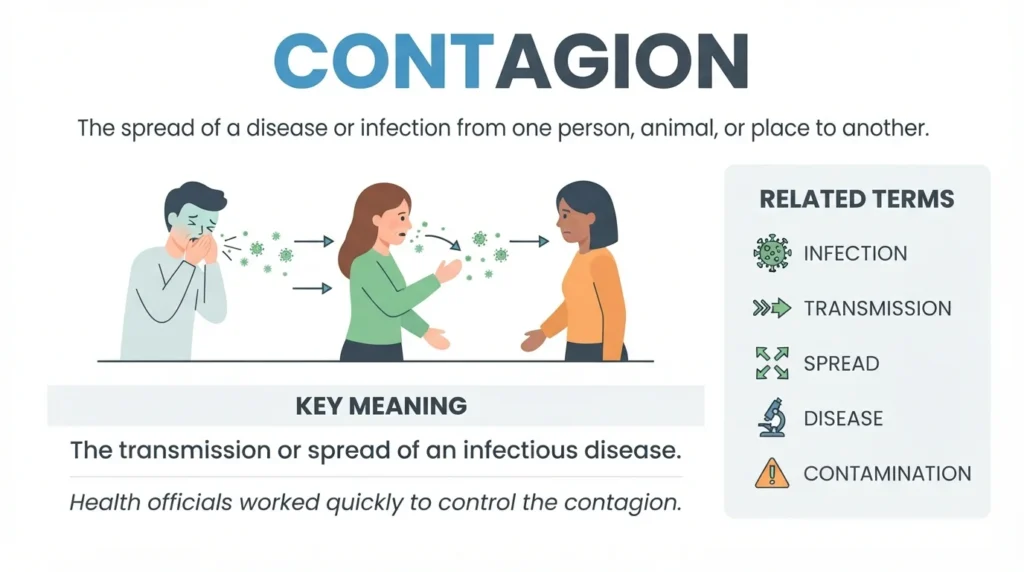
The word “contagion” refers to the spread of disease from one person to another by direct or indirect contact. Native speakers also use it figuratively to describe how feelings, ideas, or behaviors quickly spread across a crowd or society.
It is a noun part of speech and usually has a dramatic, serious, or urgent emotional tone depending on the context.
- Definition: A disease spread by direct or indirect contact, or the rapid transmission of an influence, emotion, or doctrine.
Connotative Meaning
Connotation is the emotional feeling or cultural idea that a word carries beyond its explicit dictionary definition.
- Positive tone: Laughter, joy, enthusiasm, or positive social movements spreading rapidly.
- Negative tone: Lethal viruses, panic, fear, financial ruin, or dangerous rumors.
- Neutral tone: Scientific biological transmission, statistical modeling, or neutral social trends.
Etymology
The word comes from Late Middle English via Old French, originating from the Latin contagio, derived from con- (together) and tangere (to touch).
- Old English (450–1100): The word did not exist in Old English; concepts were described using native Germanic terms for sickness.
- Middle English (1100–1500): Entered the language as a medical term for infectious physical contact.
- Modern English (1500–Present): Expanded significantly to include figurative emotional and financial spread across global networks.
Pronunciation (US & UK – IPA)
- US: /kənˈteɪ.dʒən/
- UK: /kənˈteɪ.dʒən/
Syllables
con-ta-gion
Affixation Pattern of Contagion
- Root: tag (Latin tangere, meaning to touch)
- Prefix: con- (together / with)
- Suffix: -ion (process/state of being)
Synonyms List
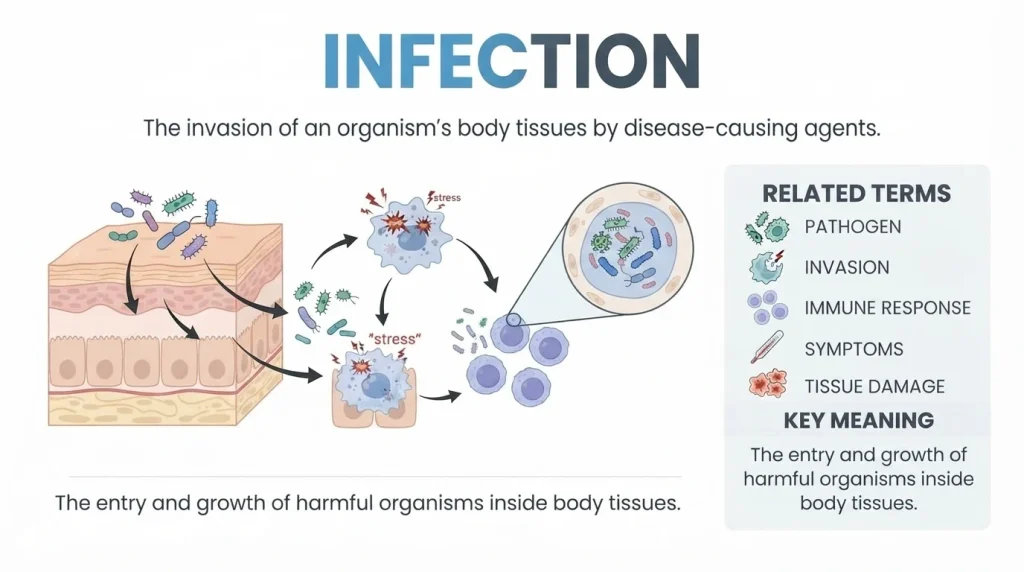
Infection (Noun) — US: /ɪnˈfek.ʃən/ | UK: /ɪnˈfek.ʃən/
- Meaning: The invasion of an organism’s body tissues by disease-causing agents.
- Tone/Register: Formal, Medical, Neutral
- Example 1: The doctor cleaned the wound carefully to stop an infection.
- Example 2: Clean water prevents the rapid spread of bacterial infection.
Epidemic (Noun) — US: /ˌep.əˈdem.ɪk/ | UK: /ˌep.ɪˈdem.ɪk/
- Meaning: A widespread occurrence of an infectious disease in a community at a particular time.
- Tone/Register: Serious, Academic, Formal
- Example 1: The city faced a sudden flu epidemic during late winter.
- Example 2: Health officials acted quickly to contain the growing epidemic.
Pandemic (Noun) — US: /pænˈdem.ɪk/ | UK: /pænˈdem.ɪk/
- Meaning: An outbreak of a disease prevalent over a whole country or the entire world.
- Tone/Register: Serious, Global, Official
- Example 1: Global travel accelerated the reach of the recent pandemic.
- Example 2: Hospitals updated their safety rules during the global pandemic.
Plague (Noun) — US: /pleɪɡ/ | UK: /pleɪɡ/
- Meaning: A contagious bacterial disease characterized by fever and delirium, or any widespread calamity.
- Tone/Register: Dramatic, Historical, Strong Negative
- Example 1: Ancient cities suffered greatly whenever a plague hit them.
- Example 2: Locusts created a destructive plague across agricultural fields.
Pestilence (Noun) — US: /ˈpes.tə.ləns/ | UK: /ˈpes.tɪ.ləns/
- Meaning: A fatal epidemic disease, especially bubonic plague.
- Tone/Register: Literary, Archaic, Formal
- Example 1: Old historical novels often describe life during times of pestilence.
- Example 2: The village isolated itself to escape the deadly pestilence.
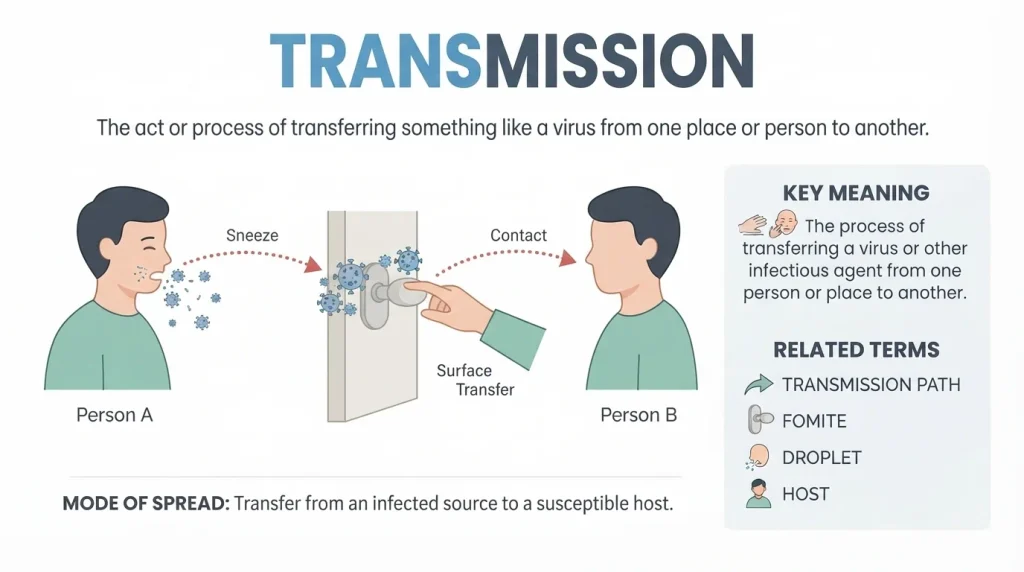
Transmission (Noun) — US: /trænzˈmɪʃ.ən/ | UK: /trænzˈmɪʃ.ən/
- Meaning: The act or process of transferring something like a virus from one place or person to another.
- Tone/Register: Scientific, Technical, Neutral
- Example 1: Wearing masks reduces the transmission of airborne germs.
- Example 2: Scientists study the rapid transmission of flu strains.
Outbreak (Noun) — US: /ˈaʊt.breɪk/ | UK: /ˈaʊt.breɪk/
- Meaning: A sudden or violent start of something unwelcome, such as a disease.
- Tone/Register: Journalistic, Direct, Neutral
- Example 1: The local news reported a fresh outbreak of measles.
- Example 2: Early quarantine measures stopped the viral outbreak fast.
Pollution (Noun) — US: /pəˈluː.ʃən/ | UK: /pəˈluː.ʃən/
- Meaning: The presence in or introduction into the environment of a substance with harmful effects.
- Tone/Register: Environmental, Formal, Negative
- Example 1: Air pollution makes asthma symptoms much worse for city kids.
- Example 2: Factory runoff caused severe pollution in the local river.
Contamination (Noun) — US: /kənˌtæm.əˈneɪ.ʃən/ | UK: /kənˌtæm.ɪˈneɪ.ʃən/
- Meaning: The action or state of making something impure or poisonous by polluting it.
- Tone/Register: Technical, Scientific, Negative
- Example 1: Water contamination led to the immediate closure of the well.
- Example 2: The lab discarded the samples due to chemical contamination.
Blight (Noun) — US: /blaɪt/ | UK: /blaɪt/
- Meaning: A plant disease or something that spoils or damages something else.
- Tone/Register: Literary, Dramatic, Negative
- Example 1: Potato blight destroyed the entire crop within a few weeks.
- Example 2: Corruption acts as a moral blight on modern society.
Spread (Noun) — US: /spred/ | UK: /spred/
- Meaning: The act or process of extending or distributing over a wider area.
- Tone/Register: Everyday, Conversational, Neutral
- Example 1: Proper hand washing limits the spread of common colds.
- Example 2: Social media sped up the spread of wild rumors online.
Canker (Noun) — US: /ˈkæŋ.kɚ/ | UK: /ˈkæŋ.kər/
- Meaning: A destructive disease of trees or a corrupting influence that spreads.
- Tone/Register: Literary, Old-fashioned, Negative
- Example 1: Greed became a spreading canker within the organization.
- Example 2: The gardener removed branches ruined by plant canker.
Miasma (Noun) — US: /miˈæz.mə/ | UK: /miˈæz.mə/
- Meaning: An oppressive or unpleasant atmosphere which surrounds or emanates from something.
- Tone/Register: Literary, Atmospheric, Negative
- Example 1: A thick miasma of fear hung over the quiet town.
- Example 2: Smoke created a dark miasma above the burning factory.
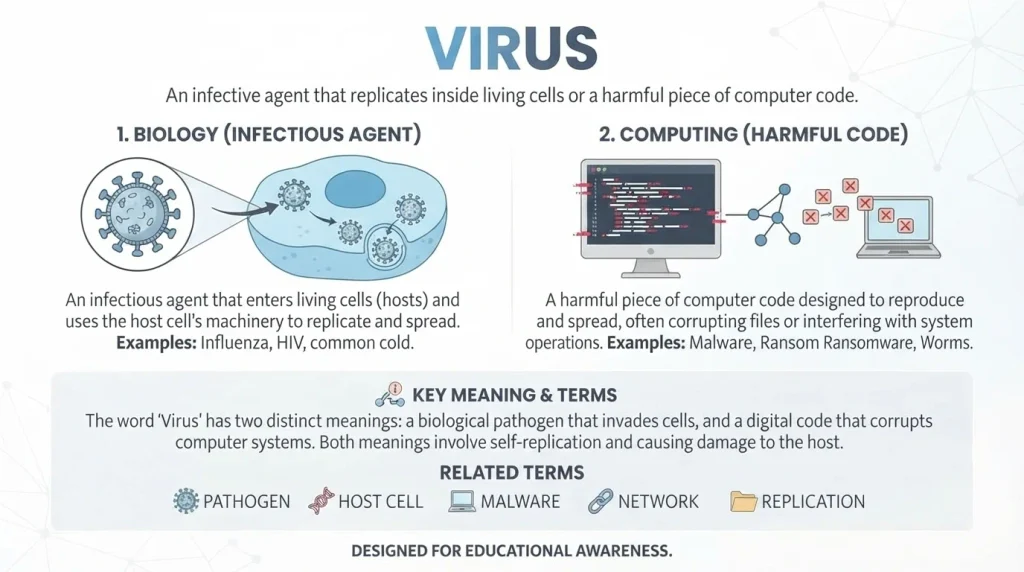
Virus (Noun) — US: /ˈvaɪ.rəs/ | UK: /ˈvaɪ.rəs/
- Meaning: An infective agent that replicates inside living cells, or a harmful piece of computer code.
- Tone/Register: Technical, Modern, Everyday
- Example 1: He caught a mild winter virus and stayed in bed.
- Example 2: Anti-virus software blocked the dangerous computer virus.
Bane (Noun) — US: /beɪn/ | UK: /beɪn/
- Meaning: A cause of great distress or annoyance.
- Tone/Register: Dramatic, Expressive, Negative
- Example 1: Constant traffic is the main bane of my daily commute.
- Example 2: Procrastination is the ultimate bane of productive students.
Scourge (Noun) — US: /skɝːdʒ/ | UK: /skɜːdʒ/
- Meaning: A person or thing that causes great trouble or suffering.
- Tone/Register: Formal, Newspaper, Heavy Negative
- Example 1: Poverty remains a severe scourge in many remote regions.
- Example 2: The country fought hard to end the scourge of malaria.
Corruption (Noun) — US: /kəˈrʌp.ʃən/ | UK: /kəˈrʌp.ʃən/
- Meaning: Dishonest or fraudulent conduct by those in power, or decay.
- Tone/Register: Political, Legal, Formal
- Example 1: Public protests erupted after evidence of corruption emerged.
- Example 2: Data corruption corrupted the files on the hard drive.
Taint (Noun) — US: /teɪnt/ | UK: /teɪnt/
- Meaning: A trace of a bad or undesirable quality or substance.
- Tone/Register: Literary, Subtle, Negative
- Example 1: The scandal left a permanent taint on his reputation.
- Example 2: Fresh air cleared the faint taint of chemical fumes.
Murrain (Noun) — US: /ˈmɝː.ɪn/ | UK: /ˈmʌr.ɪn/
- Meaning: An infectious disease affecting cattle or other livestock.
- Tone/Register: Archaic, Historical, Agriculture
- Example 1: History books detail the terrible murrain that struck medieval farms.
- Example 2: Farmers guarded their herds against any incoming murrain.
Disease (Noun) — US: /dɪˈziːz/ | UK: /dɪˈziːz/
- Meaning: A disorder of structure or function in a human, animal, or plant.
- Tone/Register: General, Medical, Standard
- Example 1: Regular exercise helps prevent heart disease later in life.
- Example 2: Doctors identified the rare medical disease quickly.
Communicability (Noun) — US: /kəˌmjuː.nə.kəˈbɪl.ə.t̬i/ | UK: /kəˌmjuː.nɪ.kəˈbɪl.ə.ti/
- Meaning: The quality of being easily transmitted from one person to another.
- Tone/Register: Academic, Medical, Formal
- Example 1: The high communicability of the virus worried health officials.
- Example 2: Testing revealed the low communicability of the new strain.
Infestation (Noun) — US: /ˌɪn.fesˈteɪ.ʃən/ | UK: /ˌɪn.feˈsteɪ.ʃən/
- Meaning: The presence of an unusually large number of insects or animals in a place causing damage.
- Tone/Register: Direct, Household, Negative
- Example 1: The old kitchen had a major termite infestation.
- Example 2: Exterminators handled the sudden ant infestation in hours.
Virulence (Noun) — US: /ˈvɪr.jə.ləns/ | UK: /ˈvɪr.jʊ.ləns/
- Meaning: The severity or harmfulness of a disease or poison, or bitter hostility.
- Tone/Register: Academic, Serious, Formal
- Example 1: The extreme virulence of the toxin shocked researchers.
- Example 2: His online posts were filled with unnecessary personal virulence.
Poison (Noun) — US: /ˈpɔɪ.zən/ | UK: /ˈpɔɪ.zən/
- Meaning: A substance that causes death or harm when introduced into an organism.
- Tone/Register: Direct, General, Negative
- Example 1: Label all household chemicals clearly to prevent poison accidents.
- Example 2: Jealousy acts like a slow poison in close friendships.
Venom (Noun) — US: /ˈven.əm/ | UK: /ˈven.əm/
- Meaning: Poisonous fluid secreted by animals like snakes, or extreme malice.
- Tone/Register: Dramatic, Biological, Negative
- Example 1: Snake venom can be neutralized with proper medical antivenom.
- Example 2: Her words were dripping with pure venom during the argument.
Ripple Effect (Noun) — US: /ˈrɪp.əl əˈfekt/ | UK: /ˈrɪp.əl ɪˈfekt/
- Meaning: The continuing and spreading results of an event or action.
- Tone/Register: Business, Casual, Modern
- Example 1: The rise in fuel prices created a massive ripple effect.
- Example 2: A tiny smile can start a positive ripple effect in a room.
Chain Reaction (Noun) — US: /ˌtʃeɪn riˈæk.ʃən/ | UK: /ˌtʃeɪn riˈæk.ʃən/
- Meaning: A series of events in which each induces the next.
- Tone/Register: Technical, Everyday, Neutral
- Example 1: Dropping one book caused a domino-like chain reaction.
- Example 2: High interest rates set off an economic chain reaction.
Domino Effect (Noun) — US: /ˈdɑː.mə.noʊ əˈfekt/ | UK: /ˈdɒm.ɪ.nəʊ ɪˈfekt/
- Meaning: A cumulative effect produced when one event sets off a chain of similar events.
- Tone/Register: Idiomatic, Business, Conversational
- Example 1: The bank collapse caused a dangerous domino effect across markets.
- Example 2: One cancellation created a domino effect on our entire schedule.
Wave (Noun) — US: /weɪv/ | UK: /weɪv/
- Meaning: A sudden increase in a particular phenomenon or feeling spreading through a group.
- Tone/Register: Everyday, Expressive, Neutral
- Example 1: A sudden wave of panic swept through the trading floor.
- Example 2: The summer brought a pleasant wave of tourism to town.
Influx (Noun) — US: /ˈɪn.flʌks/ | UK: /ˈɪn.flʌks/
- Meaning: An arrival or entry of large numbers of people or things.
- Tone/Register: Formal, Economic, Neutral
- Example 1: The city prepared for a huge influx of weekend visitors.
- Example 2: New tech companies created an influx of skilled jobs.
Inundation (Noun) — US: /ˌɪn.ʌnˈdeɪ.ʃən/ | UK: /ˌɪn.ʌnˈdeɪ.ʃən/
- Meaning: An overwhelming abundance of people or things, or a flood.
- Tone/Register: Formal, Dramatic, Heavy
- Example 1: Customer support faced an inundation of angry support tickets.
- Example 2: Heavy rain resulted in the complete inundation of fields.
Outpour (Noun) — US: /ˈaʊt.pɔːr/ | UK: /ˈaʊt.pɔː/
- Meaning: A sudden, strong expression or rush of feelings or support.
- Tone/Register: Warm, Expressive, Positive
- Example 1: The community offered an outpour of support for the family.
- Example 2: Her speech sparked a genuine outpour of creative ideas.
Transference (Noun) — US: /trænˈsfɝː.əns/ | UK: /trænˈsfɜː.rəns/
- Meaning: The action of transferring something from one place or person to another.
- Tone/Register: Academic, Psychology, Formal
- Example 1: Thermal transference occurs when hot and cold objects touch.
- Example 2: The patient showed an emotional transference toward the therapist.
Spillover (Noun) — US: /ˈspɪl.oʊ.vɚ/ | UK: /ˈspɪl.əʊ.vər/
- Meaning: An instance of overflowing or spreading into another area.
- Tone/Register: Economic, Policy, Business
- Example 1: Political instability caused a spillover into neighboring border towns.
- Example 2: The late meeting had a spillover effect on our evening plans.
Mania (Noun) — US: /ˈmeɪ.ni.ə/ | UK: /ˈmeɪ.ni.ə/
- Meaning: An excessive enthusiasm or obsession that spreads fast among people.
- Tone/Register: Informal, Psychological, Vivid
- Example 1: Ticket sales created absolute mania among young pop fans.
- Example 2: The new gaming app caused a temporary mania nationwide.
Craze (Noun) — US: /kreɪz/ | UK: /kreɪz/
- Meaning: An enthusiasm for a particular activity or object, typically short-lived.
- Tone/Register: Informal, Casual, Light
- Example 1: The new dance craze went viral on video apps overnight.
- Example 2: Fitness trends often become a short craze before fading away.
Fad (Noun) — US: /fæd/ | UK: /fæd/
- Meaning: An intense and widely shared enthusiasm that is short-lived.
- Tone/Register: Informal, Everyday, Neutral
- Example 1: Organic juice cleanses became a popular health fad last year.
- Example 2: Don’t spend too much money on a temporary market fad.
Trend (Noun) — US: /trend/ | UK: /trend/
- Meaning: A general direction in which something is developing or changing.
- Tone/Register: Business, General, Neutral
- Example 1: Remote work remains a growing trend in modern business.
- Example 2: Fashion designers set the upcoming winter trend early.
Movement (Noun) — US: /ˈmuːv.mənt/ | UK: /ˈmuːv.mənt/
- Meaning: A group of people working together to advance shared political, social, or artistic ideas.
- Tone/Register: Inspiring, Political, Formal
- Example 1: The clean energy movement gained millions of new supporters.
- Example 2: Grassroots organizers started a powerful voter education movement.
Enthusiasm (Noun) — US: /ɪnˈθuː.zi.æz.əm/ | UK: /ɪnˈθjuː.zi.æz.əm/
- Meaning: Intense and eager enjoyment, interest, or approval that can spread easily.
- Tone/Register: Warm, Positive, General
- Example 1: Her natural enthusiasm inspired the whole project team today.
- Example 2: The coach praised the team’s strong enthusiasm during practice.
Synonyms for “Contagion” by Tone
Tone matters deeply in word choice because picking the wrong word can mislead your listener or change your essay’s meaning entirely.
Positive Tone
- Outpour
- Enthusiasm
- Movement
Neutral Tone
- Transmission
- Spread
- Wave
- Trend
- Chain Reaction
Negative Tone
- Epidemic
- Plague
- Pestilence
- Contamination
- Scourge
Playful / Informal Tone
- Mania
- Craze
- Fad
Mini Comparison
Contagion vs. Epidemic vs. Transmission
- Meaning Difference: Contagion emphasizes the mechanism of direct or indirect spreading (biological or emotional). Epidemic focuses on the scale and geographic region of an outbreak. Transmission describes the technical, scientific transfer process itself.
- Tone Difference: Contagion carries dramatic or figurative weight. Epidemic sounds serious and public-health focused. Transmission is strictly clinical and neutral.
- When to Use Each: Use contagion when describing how panic, laughter, or viruses hop from person to person. Use epidemic when writing about community-wide health figures. Use transmission for medical papers or technical guidelines.
How “Contagion” Changes by Context
- Daily Conversation: People rarely talk about biological contagion at dinner. Instead, they use casual words like bug, flu, or describe a wave of excitement going around the table.
- Writing or Blogging: Bloggers love using contagion metaphorically. It works well to describe viral social media trends, spreading fear, or infectious positive attitudes.
- Professional or Academic Tone: Medical researchers prefer precise terms like viral transmission or pathogenic spread. Financial analysts use financial contagion when one market crash hits neighboring countries.
- Creative or Informal Use: Novelists use dramatic synonyms like miasma, blight, or scourge to build dark atmospheres and high tension in fiction.
Common Mistakes & Native Usage
- Misuse Scenarios: A frequent mistake is using contagion to mean a single poison or chemical leak. Contagion requires an element of spreading or passing along between entities.
- Confusing Tone: Do not use heavy historical words like pestilence in a modern medical email. It sounds overly dramatic and outdated.
- Overuse Warnings: Avoid using contagion repeatedly in a single essay. Swap it with spread, outbreak, or transmission to keep prose fresh.
For more tips on refining word choices in formal academic papers, check out our guide on advanced writing registers.
Real-Life Mini Scenarios
- Workplace: A team leader presents a new vision. Her excitement proves to be a positive contagion, motivating every department to meet their quarterly goals early.
- Social Situations: At a comedy club, one person’s loud laugh starts a chain reaction. Soon, the entire room is roaring with unstoppable laughter.
- Media / Pop Culture: Financial news outlets frequently warn about market contagion whenever major global banks face sudden liquidity problems.
- Storytelling: In fantasy novels, dark magic often acts like a creeping blight or pestilence, slowly corrupting peaceful villages.
MCQs
1. What is the closest synonym of “contagion”?
A) Infection
B) Protection
C) Recovery
D) Prevention
2. Which word means the spread of a disease from one person to another?
A) Contagion
B) Healing
C) Immunity
D) Treatment
3. “The disease spread quickly through the community.” Which word can replace “spread”?
A) Contagion
B) Isolation
C) Cure
D) Safety
4. Which is a synonym for “contagion”?
A) Infection
B) Cleanliness
C) Health
D) Defense
5. What does “contagion” usually refer to?
A) The transmission of disease
B) The process of healing
C) Protection from illness
D) Physical exercise
6. Which word is closest in meaning to “contagion”?
A) Transmission
B) Prevention
C) Recovery
D) Treatment
7. “The flu spread from person to person.” What word best describes this spread?
A) Contagion
B) Immunity
C) Cure
D) Prevention
8. Which word can be used as a synonym for “contagion” in a medical context?
A) Infection
B) Wellness
C) Protection
D) Recovery
9. Which word is NOT a synonym for “contagion”?
A) Infection
B) Transmission
C) Spread
D) Immunity
10. Which sentence uses “contagion” correctly?
A) The hospital worked to prevent the contagion from spreading.
B) The doctor used contagion to cure the patient.
C) The medicine created contagion to improve health.
D) The patient gained contagion after recovering.
Answer Key
- A
- A
- A
- A
- A
- A
- A
- A
- D
- A
Reflection Task: Write one short sentence describing a positive emotional moment in your day using the word enthusiasm or ripple effect.
FAQs
1. What is the most common synonym for contagion in medical contexts?
In medical contexts, infection, transmission, and outbreak are the most common synonyms. Medical professionals prefer these terms because they describe exact biological processes clearly without adding dramatic or poetic sensationalism.
2. Can contagion be used in a positive sentence?
Yes, contagion can describe positive things like laughter, enthusiasm, or joy spreading through a group. When used this way, it highlights how fast a great feeling catches on among people.
3. What is the difference between contagion and infection?
Contagion refers specifically to the spread or transmission of a disease or mood via contact. Infection refers to the actual state of germs invading host body tissues, regardless of how they got there.
4. Is contagion a formal or informal word?
Contagion is a neutral to formal word. You will encounter it often in news reports, academic essays, medical literature, and financial analysis, but rarely in casual, spoken conversations.
5. What are good financial synonyms for contagion?
In finance, analysts often replace contagion with domino effect, spillover effect, ripple effect, or chain reaction. These terms describe how trouble in one bank or market quickly impacts others globally.
Conclusion
Expanding your vocabulary with rich synonyms for contagion gives you the power to express complex physical and emotional ideas with crystal clarity every day.
When you master subtle shades of meaning, your essays, blog posts, and daily speeches immediately become more engaging, dynamic, and polished for any audience.
Try integrating these fresh alternative words into your upcoming emails, academic assignments, or casual conversations to build natural confidence and fluid language skills.
Which new synonym from this guide will you practice in your very next conversation or writing project to make your personal communication truly stand out?

Sophia Carter is the founder and lead writer at SynonymVerse.com, a trusted online resource dedicated to English vocabulary and effective communication. She is passionate about helping students, writers, professionals, and lifelong learners find the most accurate words to express their ideas with clarity and confidence.
At SynonymVerse.com, every article is carefully researched and thoughtfully written to provide reliable guidance on synonyms, word meanings, and vocabulary. With a strong focus on accuracy, real-world usage, and easy-to-understand explanations, the website is committed to helping readers strengthen their language skills, enrich their vocabulary, and become more confident communicators.