
Synonym for seed can make your writing more precise and engaging. Whether you’re writing about plants, growth, or figurative ideas, the right word improves clarity.
A synonym for seed may refer to a kernel, grain, pip, or the beginning of something. Each alternative has a unique meaning depending on the context.
This guide features 45 powerful alternatives with simple meanings and practical examples. You’ll learn how to use each word correctly in everyday and professional writing.
If you’re searching for the best synonym for seed, this list will help you expand your vocabulary and choose the most suitable word with confidence.
What Does “Seed” Really Mean?
The word seed primarily acts as a noun, but it can also function as a verb. As a noun, it refers to the small, hard part of a plant from which a new plant can grow. Metaphorically, it refers to the very early stage or the starting point of a feeling, plan, process, or idea.
Native speakers understand this word as a symbol of potential, raw beginnings, and organic growth. It frequently appears in contexts like gardening, farming, scientific discussions, and business planning. The emotional tone is typically positive, hopeful, and forward-looking.
Connotative Meaning
Connotation is the emotional feeling or cultural association that a word carries beyond its literal definition.
- Positive tone: It represents hope, future success, clean beginnings, and natural potential.
- Negative tone: It can occasionally refer to the origin of something bad, such as planting trouble or doubt.
- Neutral tone: It simply refers to the physical, biological item produced by a flowering plant.
Etymology
The word seed comes from the Old English word sæd, which means that which is sown or can be planted. This word originates from Proto-Germanic sēdiz, which has roots in the Proto-Indo-European root sē- meaning to sow or plant.
- Old English (450–1100): The word was written as sæd, referring to agricultural grain, crops, and offspring.
- Middle English (1100–1500): The word evolved into seed or sede, expanding to describe any small germ that starts a living thing.
- Modern English (1500–Present): The term became heavily used in figurative language, describing the birth of ideas, startup funding, and sports tournament rankings.
Pronunciation
- US: /ˈsiːd/
- UK: /ˈsiːd/
Syllables
seed
Affixation Pattern
- Root: seed
- Prefix: None
- Suffix: None
Synonyms List
Pip (Noun) — US: /ˈpɪp/ | UK: /ˈpɪp/
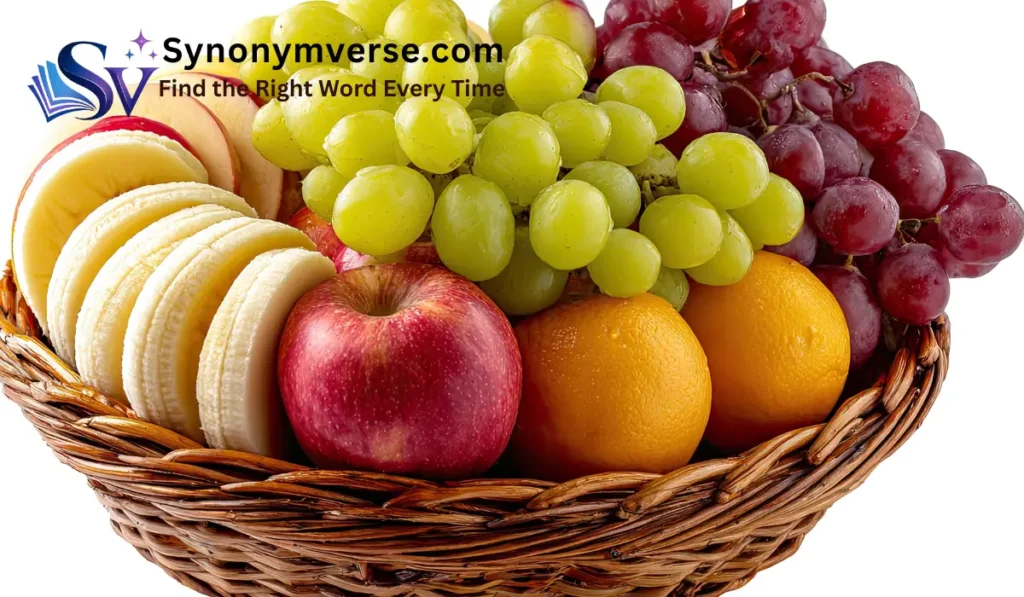
Meaning: A small, hard seed found inside fleshy fruits like apples, oranges, and grapes.
Examples:
- He accidentally swallowed an orange pip while drinking his juice.
- She spat the tiny apple pip into the trash can.
Stone (Noun) — US: /ˈstoʊn/ | UK: /ˈstəʊn/
Meaning: A large, hard seed found inside fruits like peaches, plums, and cherries.
Examples:
- Be careful not to bite into the peach stone because it is very hard.
- She saved the cherry stone to see if she could plant it later.
Pit (Noun) — US: /ˈpɪt/ | UK: /ˈpɪt/
Meaning: The single, large, hard seed in the middle of fruits like avocados, cherries, and olives.
Examples:
- He carefully removed the avocado pit before slicing the green fruit.
- She dropped the olive pit onto her small side plate.
Kernel (Noun) — US: /ˈkɝː.nəl/ | UK: /ˈkɜː.nəl/
Meaning: The inner, softer part of a nut or seed fruit, or a single grain of corn.
Examples:
- The squirrel nibbled on the tasty hazelnut kernel.
- She found a single unpopped popcorn kernel at the bottom of the bowl.
Grain (Noun) — US: /ˈɡreɪn/ | UK: /ˈɡreɪn/
Meaning: A single, hard seed from food plants like wheat, corn, rice, or oats.
Examples:
- He ran his hand through the warm grain stored in the barn.
- The bird carried a small grain of wheat back to its nest.
Spore (Noun) — US: /ˈspɔːr/ | UK: /ˈspɔː/
Meaning: A tiny, single-celled reproductive unit of plants like ferns, mosses, and fungi.
Examples:
- Mushroom spores drift quietly through the forest air to grow in new spots.
- She studied the fern spore under a high-powered school microscope.
Germ (Noun) — US: /ˈdʒɝːm/ | UK: /ˈdʒɜːm/
Meaning: The small part of a seed or living thing that is the very origin of growth.
Examples:
- Wheat germ is packed with vitamins and is great for your health.
- The scientist explained how the tiny germ inside a seed begins to sprout.
Embryo (Noun) — US: /ˈem.bri.oʊ/ | UK: /ˈem.bri.əʊ/
Meaning: An animal or plant in the earliest stages of development before birth or hatching.
Examples:
- The plant embryo rests safely inside the hard seed coat until spring.
- Teachers showed us a diagram of a bean embryo starting to grow.
Seedling (Noun) — US: /ˈsiːd.lɪŋ/ | UK: /ˈsiːd.lɪŋ/
Meaning: A very young plant that has recently grown from a planted seed.
Examples:
- She carefully watered the fragile tomato seedling in the greenhouse.
- Strong winds can easily damage a young seedling in the open garden.
Nut (Noun) — US: /ˈnʌt/ | UK: /ˈnʌt/
Meaning: A fruit consisting of a hard shell around an edible, oil-rich seed kernel.
Examples:
- He used a metal tool to crack open the tough walnut.
- She bought a bag of mixed nuts to snack on during her hike.
Bean (Noun) — US: /ˈbiːn/ | UK: /ˈbiːn/
Meaning: A seed of various climbing plants, often used as a healthy source of food.
Examples:
- He cooked a warm pot of red beans for Sunday dinner.
- She picked fresh green beans from the garden to roast.
Berry (Noun) — US: /ˈber.i/ | UK: /ˈber.i/
Meaning: A small, round, soft fruit containing seeds that you can usually eat.
Examples:
- She picked a wild, sweet berry from the bush near the trail.
- He added a handful of fresh blueberries to his morning oatmeal bowl.
Bulb (Noun) — US: /ˈbʌlb/ | UK: /ˈbʌlb/
Meaning: A round, underground part of some plants, like onions and tulips, where food is stored.
Examples:
- She buried the tulip bulb deep in the dirt before winter came.
- He chopped an onion bulb into tiny pieces for the soup.
Tuber (Noun) — US: /ˈtuː.bɚ/ | UK: /ˈtʃuː.bər/
Meaning: A thick, round part of an underground stem of plants like potatoes that holds food.
Examples:
- A potato is a type of tuber that grows under the soil.
- The wild pig dug up a sweet tuber to eat in the forest.
Pod (Noun) — US: /ˈpɑːd/ | UK: /ˈpɒd/
Meaning: A long, thin seed container of plants like peas, beans, and cocoa.
Examples:
- She popped open the green pea pod to collect the sweet peas.
- Farmers carefully harvested the heavy cocoa pods from the tropical trees.
Origin (Noun) — US: /ˈɔːr.ə.dʒɪn/ | UK: /ˈɒr.ɪ.dʒɪn/
Meaning: The point or place where something begins, arises, or is first created.
Examples:
- Scientists are still studying the origin of life on our planet.
- The word has its origin in ancient Latin legal texts.
Source (Noun) — US: /ˈsɔːrs/ | UK: /ˈsɔːs/
Meaning: A place, person, or thing from which something comes or is obtained.
Examples:
- Oranges are an excellent natural source of Vitamin C.
- The investigative reporter refused to name her secret source.
Root (Noun) — US: /ˈruːt/ | UK: /ˈruːt/
Meaning: The basic cause, source, or origin of something, or the underground part of a plant.
Examples:
- Money is not always the root of every single problem in life.
- The oak tree has a very deep root system that holds it steady.
Beginning (Noun) — US: /bɪˈɡɪn.ɪŋ/ | UK: /bɪˈɡɪn.ɪŋ/
Meaning: The start or first part of an event, story, process, or period.
Examples:
- He missed the very beginning of the movie because of heavy traffic.
- Spring marks the beginning of the colorful flower-growing season.
Start (Noun) — US: /ˈstɑːrt/ | UK: /ˈstɑːt/
Meaning: The point in time or space at which something begins to happen or exist.
Examples:
- The runner made a very fast start when the race gun fired.
- Let us make a clean start on this project tomorrow morning.
Foundation (Noun) — US: /faʊnˈdeɪ.ʃən/ | UK: /faʊnˈdeɪ.ʃən/
Meaning: The basic idea, principle, or fact on which something is built or supported.
Examples:
- Trust is the main foundation of any healthy, long-lasting friendship.
- They dug a deep hole to lay the concrete foundation for the house.
Base (Noun) — US: /ˈbeɪs/ | UK: /ˈbeɪs/
Meaning: The bottom or lowest part of something, or the main place where work is done.
Examples:
- The climbers camped at the base of the giant snow mountain.
- This soup uses a rich vegetable base to create great flavor.
Core (Noun) — US: /ˈkɔːr/ | UK: /ˈkɔː/
Meaning: The central, innermost, or most vital part of an object or an idea.
Examples:
- He threw the apple core into the backyard compost bin.
- Honesty is at the absolute core of her personal belief system.
Essence (Noun) — US: /ˈes.əns/ | UK: /ˈes.əns/
Meaning: The basic, real, or most important quality of something that makes it what it is.
Examples:
- Speed is of the essence when you are responding to an emergency.
- The artist captured the quiet essence of the forest in her painting.
Nucleus (Noun) — US: /ˈnuː.kli.əs/ | UK: /ˈnjuː.kli.əs/
Meaning: The central and most important part of an object, movement, or group that others gather around.
Examples:
- These three dedicated workers formed the nucleus of the new business.
- The nucleus of the cell contains all the important genetic code.
Spark (Noun) — US: /ˈspɑːrk/ | UK: /ˈspɑːk/
Meaning: A tiny, bright flash of light, or a small feeling or action that starts a bigger event.
Examples:
- A single hot spark from the campfire started the dry forest fire.
- Her smart comment was the spark that started a great classroom debate.
Concept (Noun) — US: /ˈkɑːn.sept/ | UK: /ˈkɒn.sept/
Meaning: A general idea, thought, or plan of what something is or how it works.
Examples:
- He explained the basic mathematical concept using simple plastic blocks.
- The architect drew a quick concept sketch of the modern office.
Idea (Noun) — US: /aɪˈdiː.ə/ | UK: /aɪˈdɪə/
Meaning: A thought, plan, suggestion, or mental image about what to do or create.
Examples:
- She had a brilliant idea for a new mobile game app.
- He wrote his business idea on a small paper napkin.
Inception (Noun) — US: /ɪnˈsep.ʃən/ | UK: /ɪnˈsep.ʃən/
Meaning: The very beginning of an organization, activity, or official project.
Examples:
- She has worked at the tech agency since its inception in 2021.
- The project faced major budget challenges from its early inception.
Genesis (Noun) — US: /ˈdʒen.ə.sɪs/ | UK: /ˈdʒen.ə.sɪs/
Meaning: The origin or mode of formation of something, especially a concept or plan.
Examples:
- The genesis of his book came from a dream he had last year.
- Scientists studied the genesis of the storm over the warm ocean.
Draft (Noun) — US: /ˈdræft/ | UK: /ˈdrɑːft/
Meaning: A preliminary outline, sketch, or version of a piece of writing or design.
Examples:
- She is writing the first draft of her new fantasy novel.
- The designer shared a rough draft of the website landing page.
Blueprint (Noun) — US: /ˈbluː.prɪnt/ | UK: /ˈbluː.prɪnt/
Meaning: A detailed photographic print of a building design, or a highly detailed plan of action.
Examples:
- The builders studied the paper blueprint before starting the brick walls.
- This document serves as our strategic blueprint for future sales.
Microcosm (Noun) — US: /ˈmaɪ.krəˌkɑː.zəm/ | UK: /ˈmaɪ.krəʊˌkɒz.əm/
Meaning: A miniature representation of something much larger, such as a community or system.
Examples:
- The small village school is a microcosm of our modern, diverse society.
- Her messy bedroom is a perfect microcosm of her busy life.
Element (Noun) — US: /ˈel.ə.mənt/ | UK: /ˈel.ɪ.mənt/
Meaning: A basic or essential part of a larger whole, system, or plan.
Examples:
- Trust is an essential element of any successful business deal.
- Water is a key chemical element that supports all organic life.
Particle (Noun) — US: /ˈpɑːr.t̬ɪ.kəl/ | UK: /ˈpɑː.tɪ.kəl/
Meaning: An extremely small piece or portion of physical matter.
Examples:
- He wiped a tiny particle of grey dust from his black coat.
- There was not a single particle of food left on the plate.
Speck (Noun) — US: /ˈspek/ | UK: /ˈspek/
Meaning: A very small spot, mark, or tiny piece of something.
Examples:
- She noticed a speck of red dirt on her clean white sleeve.
- The tiny island looked like a speck on the massive map.
Dot (Noun) — US: /ˈdɑːt/ | UK: /ˈdɒt/
Meaning: A tiny, round mark or point, or a very small spot on a surface.
Examples:
- He placed a small ink dot at the very end of his sentence.
- The tiny ladybug looked like a moving red dot on the leaf.
Atom (Noun) — US: /ˈæt̬.əm/ | UK: /ˈæt.əm/
Meaning: The smallest basic unit of a chemical element, or an extremely small amount of something.
Examples:
- Water is made up of two hydrogen atoms and one oxygen atom.
- He does not have a single atom of fear in his body.
Crumb (Noun) — US: /ˈkrʌm/ | UK: /ˈkrʌm/
Meaning: A very small fragment of bread, cake, or biscuit, or a tiny scrap of something.
Examples:
- The hungry birds quickly ate every single bread crumb on the table.
- She brushed a small cookie crumb off her notebook page.
Grain (Noun) — US: /ˈɡreɪn/ | UK: /ˈɡreɪn/
Meaning: A tiny, hard particle of a substance like sand, salt, sugar, or gold.
Examples:
- He washed a sharp grain of sand out of his left eye.
- She added a small grain of salt to the sweet chocolate recipe.
Sowing (Verb) — US: /ˈsoʊ.ɪŋ/ | UK: /ˈsəʊ.ɪŋ/
Meaning: Planting seeds in the ground so that they can grow into crops or flowers.
Examples:
- Farmers spend their busy spring days sowing wheat in the open fields.
- He is sowing grass seeds to make his front lawn look greener.
Planting (Verb) — US: /ˈplæn.t̬ɪŋ/ | UK: /ˈplɑːn.tɪŋ/
Meaning: Putting a seed, bulb, or young plant into the soil so that it will grow.
Examples:
- She is planting colorful flower bulbs along the garden path today.
- They are planting young apple trees in the new orchard.
Scattering (Verb) — US: /ˈskæt̬.ɚ.ɪŋ/ | UK: /ˈskæt.ər.ɪŋ/
Meaning: Throwing or spreading things in various directions over a wide area.
Examples:
- He was scattering wild bird food on the grass behind his house.
- The strong wind is scattering dry leaves all over the driveway.
Sprouting (Verb) — US: /ˈspraʊ.t̬ɪŋ/ | UK: /ˈspraʊ.tɪŋ/
Meaning: Producing new leaves, buds, or shoots, or starting to grow rapidly.
Examples:
- The green potato is starting to sprout small white eyes in the dark cupboard.
- Fresh grass is sprouting beautifully after the warm spring rain.
Budding (Verb) — US: /ˈbʌd.ɪŋ/ | UK: /ˈbʌd.ɪŋ/
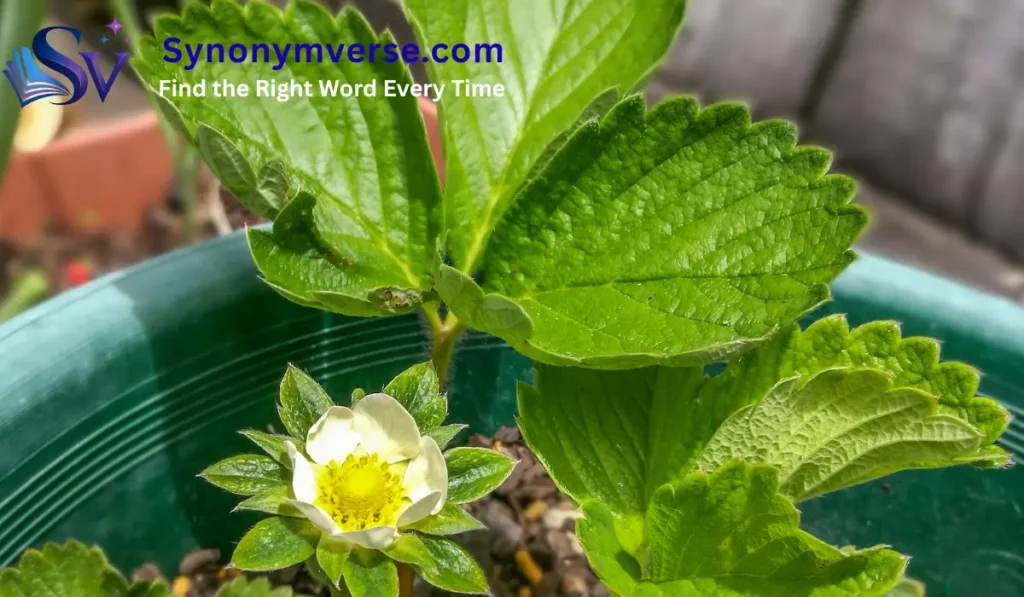
Meaning: Beginning to develop, open, or show signs of future success or growth.
Examples:
- The young actress is a budding star in the local theater company.
- Rose bushes are budding all over the park as warm weather returns.
Synonyms for “Seed” by Tone
Selecting the ideal synonym for seed depends greatly on the mood or message you are writing. Grouping these synonyms by tone will help you choose the best word for your specific project.
- Positive: Genesis, Spark, Embryo, Seedling, Inception, Essence. These words suggest fresh hope, exciting growth, creativity, and the joy of new beginnings.
- Neutral: Pip, Pit, Stone, Bulb, Pod, Grain, Element. These terms are descriptive, objective, and perfect for scientific, medical, or horticultural writing.
- Negative: Root (in contexts like ‘root of evil’), Spore (often associated with mold or decay), Pit. These words can carry associations of decay, illness, or dark, hidden problems.
- Playful / Informal: Speck, Dot, Pip, Crumb, Bean. These synonyms sound warm, approachable, and highly visual for simple conversations.
Mini Comparison
Seed vs. Kernel
Meaning Difference: Seed is a general, broad term for any plant part that reproduces. Kernel specifically refers to the softer, edible inside part of a nut shell, or a single grain of corn or wheat.
Tone Difference: Seed is incredibly common, simple, and used in both biology and poetry. Kernel sounds highly specific, textural, and is often used in culinary or technical computer discussions.
When to Use Each: Use seed when discussing general gardening or the birth of an abstract idea. Use kernel when talking about roasting nuts, eating sweet corn, or discussing the central core of an operating system.
Seed vs. Origin
Meaning Difference: Seed refers to a physical biological capsule or a metaphor for a growing idea. Origin refers to the historical starting point, place, or source from which a physical thing or word began.
Tone Difference: Seed is highly visual, suggesting future growth and active change. Origin is historical, structured, and focused on looking backward in time.
When to Use Each: Use the seed when you want to show how a small idea will grow into a big project. Use origin when explaining where a river starts or where a language family comes from.
How “Seed” Changes by Context
Daily Conversation
In casual chats, people use the word to describe simple food parts or basic plans. You might tell a friend that you bought pumpkin seeds to roast for a snack. It sounds simple and comfortable.
Writing or Blogging
Bloggers love to use the term to talk about the beginnings of motivation. A wellness blogger might write about planting a seed of daily gratitude in your mind. This helps create a warm, visual image for readers.
Professional or Academic Tone
In business or university research, the term is used for funding or core groups. Startup founders talk about securing seed money to launch their tech platforms. It highlights small but vital starting resources.
Creative or Informal Use
Novelists use it to foreshadow events. A writer might mention a character planting a seed of doubt in the king’s mind. It builds tension and shows how small actions can grow into massive problems.
Common Mistakes & Native Usage
Common Mistakes Learners Make
A frequent mistake is using ‘seed’ when referring to large, heavy tree seeds that have hard outer shells, which are more accurately described as nuts or stones. Another error is using the term ” seed for things that are actually spores, like ferns or mushrooms, which do not produce real seeds.
Register Notes
In spoken English, “seed” is a very common and widely understood term. In highly academic or biological science papers, researchers prefer terms like propagule, embryo, or seminal source to sound more precise.
If you want to read more about professional vocabulary choices, check out our guide on professional nouns (internal link placeholder).
Real-Life Mini Scenarios
Workplace
An advertising director shares a basic slogan during a quick brainstorming session, planting the seed for a major winter sales campaign.
Social Situations
You give your young cousin a small plant pot, helping them plant a sunflower seed to teach them about nature.
Media / Pop Culture
In a popular science documentary, the host explains how a single seed can survive for decades in the desert sand before rain falls.
Writing or Storytelling
The fantasy author describes a magical seed that grows into a glowing golden tree overnight in the middle of the dark forest.
Interactive Practice Exercise
- Which word fits best for the hard, single seed found inside a fresh peach or cherry?
A) Spore
B) Bulb
C) Stone
D) Seedling - If you are describing the very first spark of a creative story idea, you are talking about its:
A) Tuber
B) Grain
C) Genesis
D) Pod - Choose the synonym that refers to a tiny, young plant that has just popped out of the garden dirt.
A) Kernel
B) Seedling
C) Origin
D) Base - Which term is most appropriate when talking about planting wheat or grass in a wide field?
A) Peeking
B) Sowing
C) Grating
D) Buffing - If an onion grows from a round, underground storage part, that part is called a:
A) Spore
B) Pip
C) Bulb
D) Core - Which word carries a highly professional tone, meaning the very start of an organization or project?
A) Crumb
B) Dot
C) Inception
D) Speck - When you take the single, large seed out of an avocado, you are removing the:
A) Spore
B) Pit
C) Pod
D) Grain - What is the central, most important part of a biological cell or a close-knit group called?
A) Element
B) Nucleus
C) Speck
D) Bulb - If a wild mushroom releases tiny units into the wind to reproduce, those units are called:
A) Seeds
B) Tubers
C) Spores
D) Beans - A single piece of popcorn that did not open is called a:
A) Pip
B) Embryo
C) Kernel
D) Core
Application Task
Write one simple, original sentence using the synonym seedling to describe a plant you are growing at home or in a garden.
Answer Key
1: C, 2: C, 3: B, 4: B, 5: C, 6: C, 7: B, 8: B, 9: C, 10: C
Conclusion
Learning the right synonym for seed helps you express ideas about growth, beginnings, and development with greater precision. Whether you’re writing about nature, science, business, or personal growth, choosing the best alternative makes your content clearer and more engaging. Understanding each synonym for seed also strengthens your vocabulary and improves your communication skills.
To expand your vocabulary, practice using every synonym for seed in different contexts and sentence structures. This habit will improve your writing, reduce repetition, and help you recognize the subtle differences between similar words. Regular practice makes these alternatives easier to remember and use naturally.
Ultimately, mastering a synonym for “seed” is about selecting the word that best suits your purpose and audience. With consistent learning and practical use, you’ll write more effectively, communicate with greater confidence, and express your ideas with clarity and accuracy.

Sophia Carter is the founder and lead writer at SynonymVerse.com, a trusted online resource dedicated to English vocabulary and effective communication. She is passionate about helping students, writers, professionals, and lifelong learners find the most accurate words to express their ideas with clarity and confidence.
At SynonymVerse.com, every article is carefully researched and thoughtfully written to provide reliable guidance on synonyms, word meanings, and vocabulary. With a strong focus on accuracy, real-world usage, and easy-to-understand explanations, the website is committed to helping readers strengthen their language skills, enrich their vocabulary, and become more confident communicators.